Eight Places Worth Your Week, in the Order to See Them
A first visit has a natural order: the lakes, the pools, the kitchen, then the whales, then the far calderas. Each stop links the page that plans it in full.
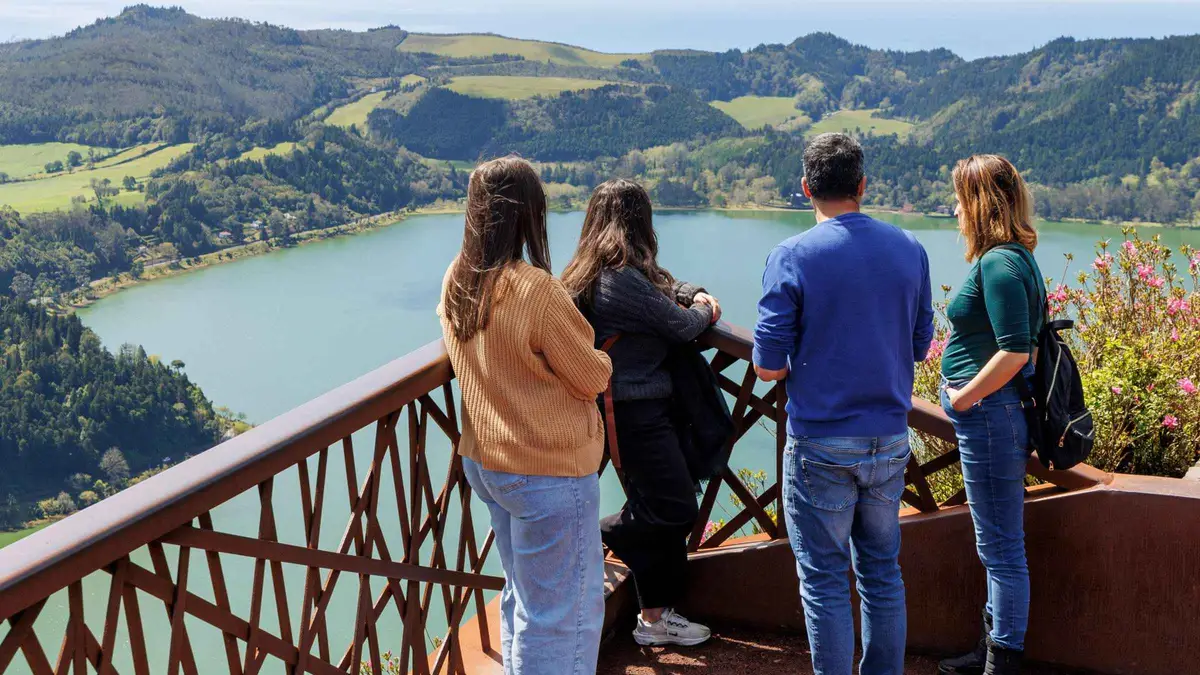
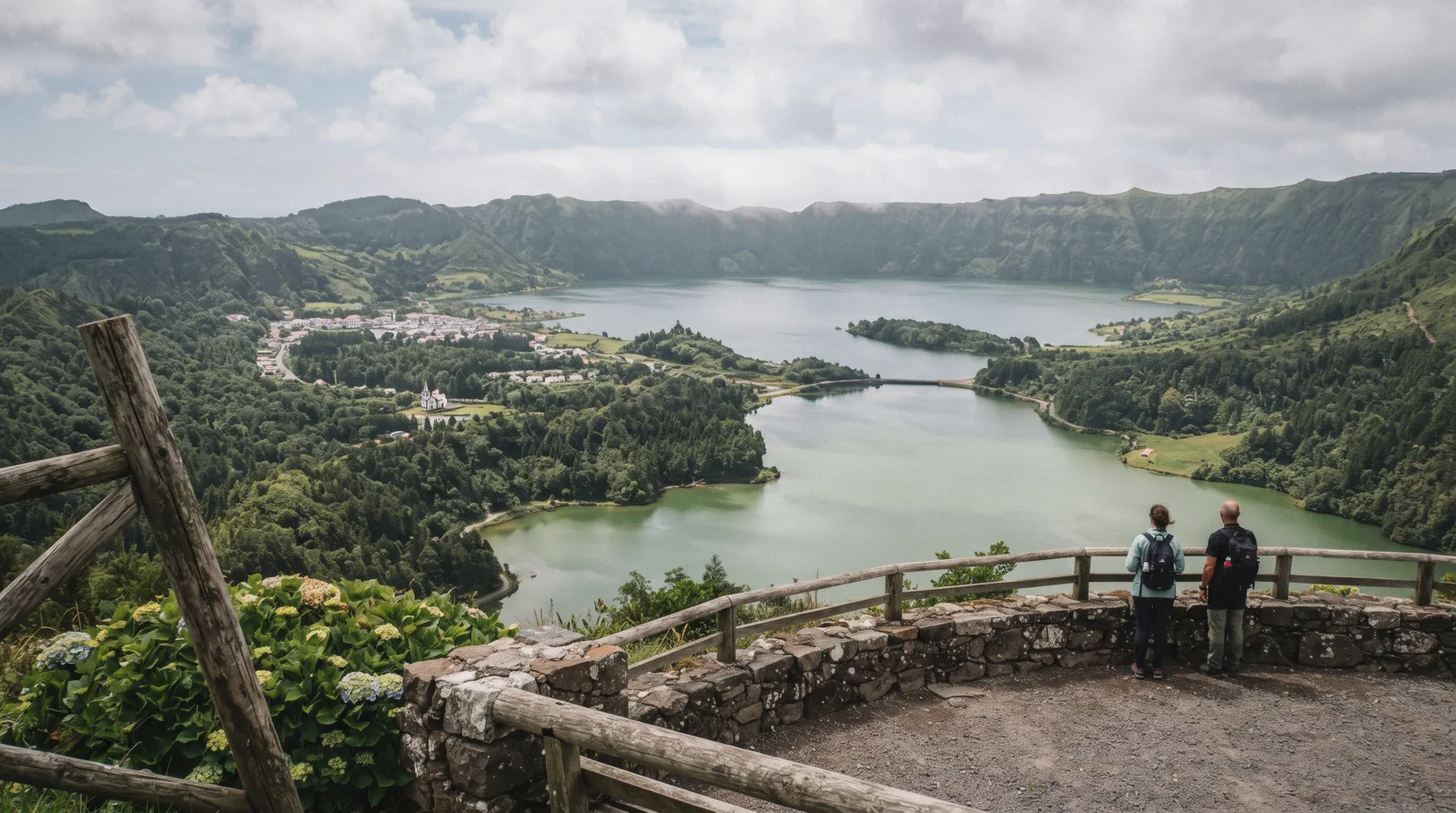
Sete Cidades, from the rim
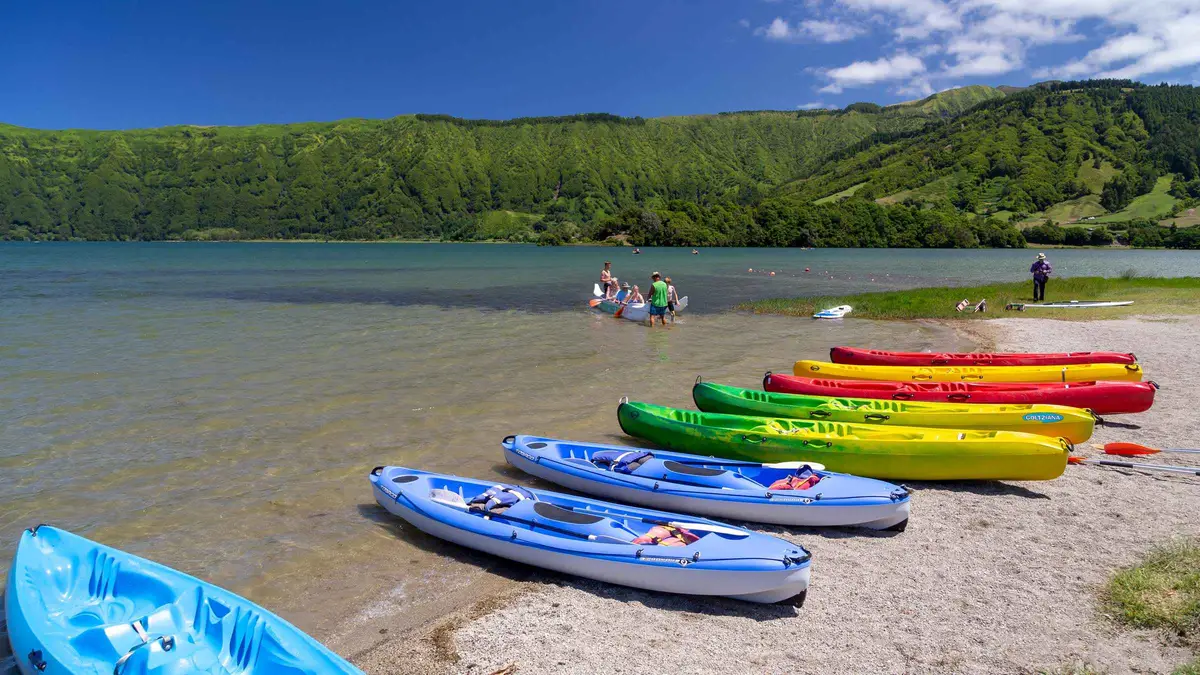
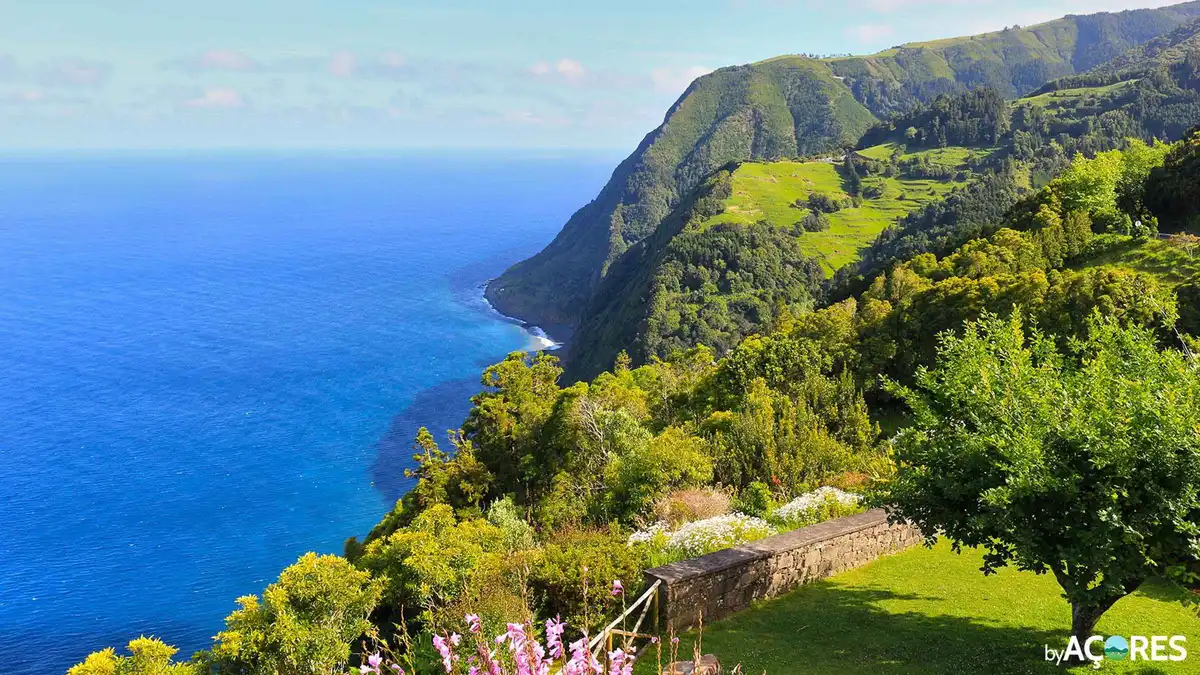
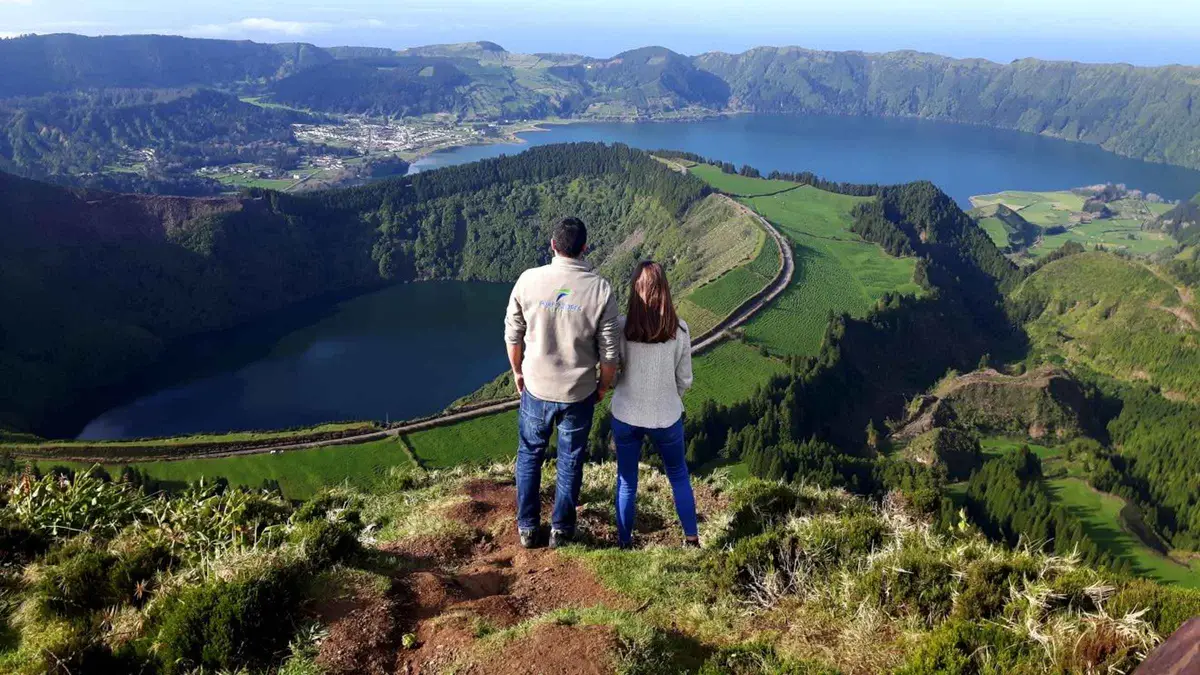
The twin lakes sit 500 m below the rim villages, blue on one side of a road bridge and green on the other, a colour split that reads as retouching until you stand over it. Vista do Rei and Boca do Inferno are free car parks with the views already framed. Go early: tour vans stack the narrow rim road by mid-morning.
The full planning page has the parking and the kayak operators.
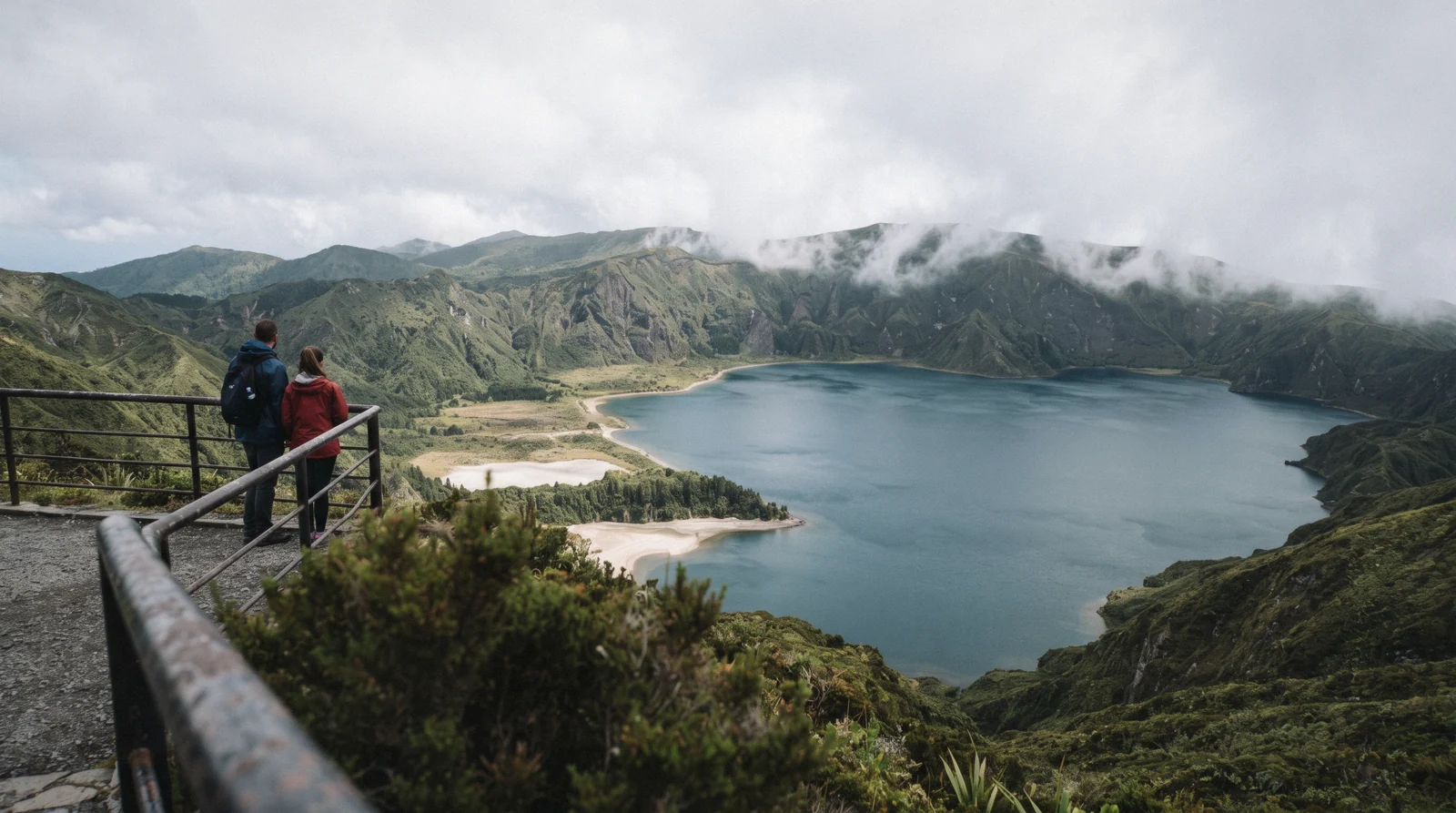
Lagoa do Fogo, from above and below
Fogo means fire, and the lake fills the youngest crater on the island with nothing built on its shore. The catch for 2026 is access: from 1 August to 30 September the rim road closes to private cars and a $9.17 (€8) hop-on shuttle runs the route instead, which actually solves the parking problem the viewpoint used to have. The access page tracks the current rules.
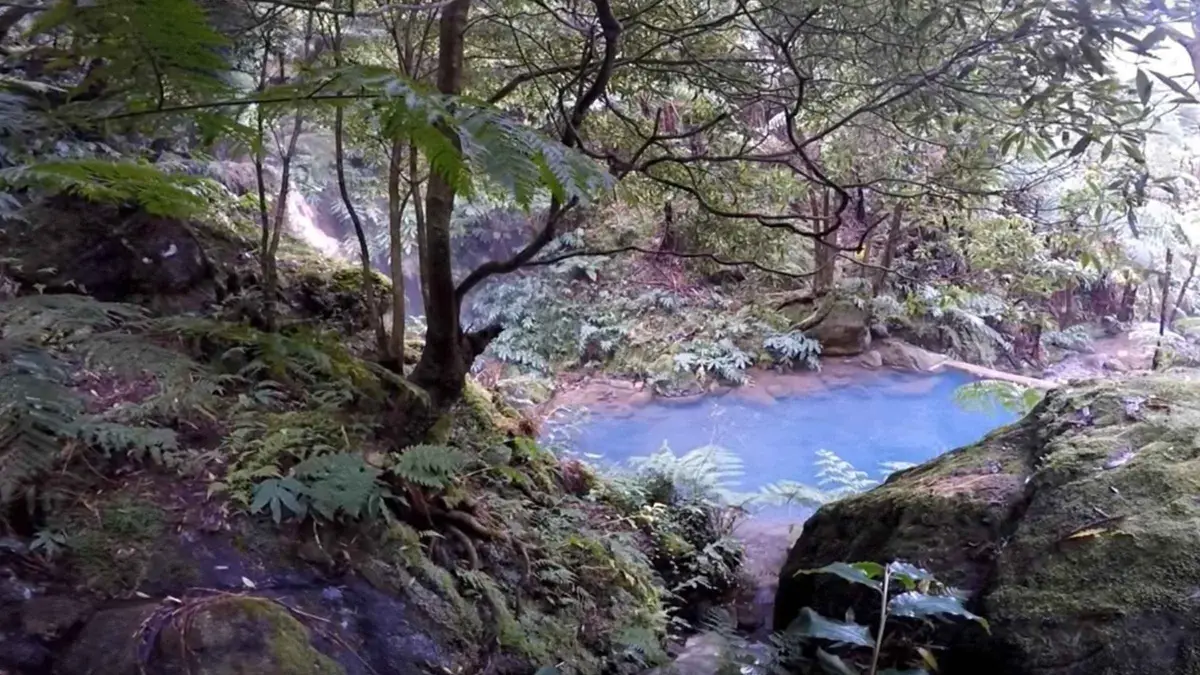
Furnas and Terra Nostra
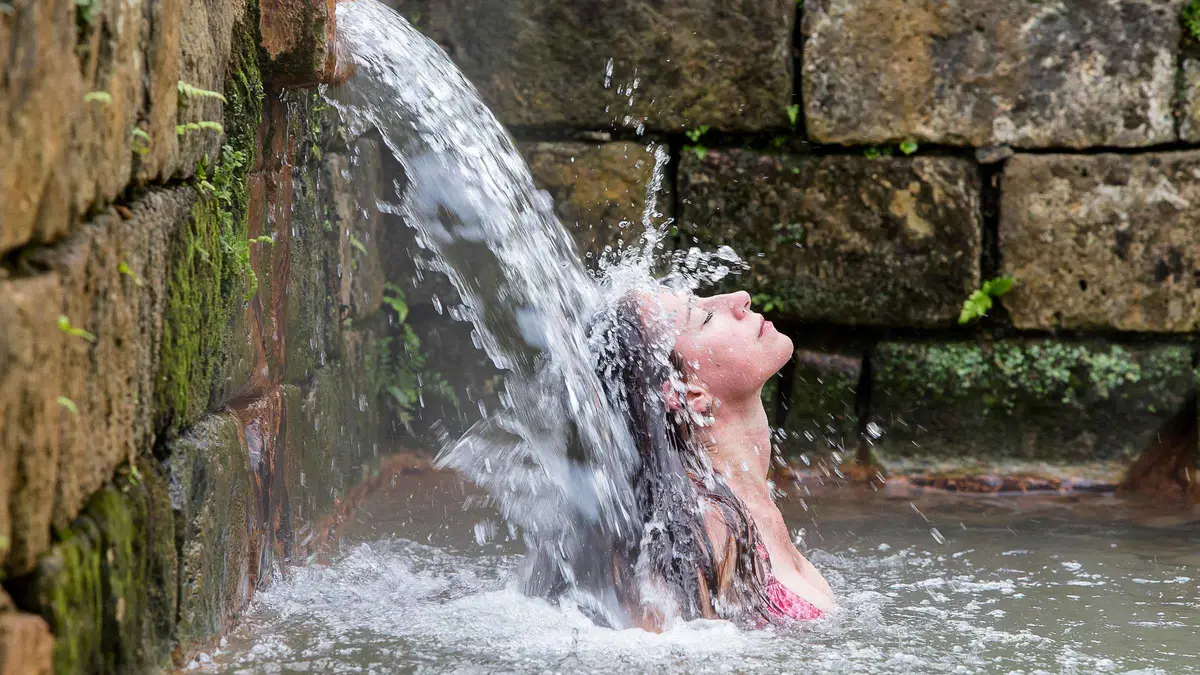
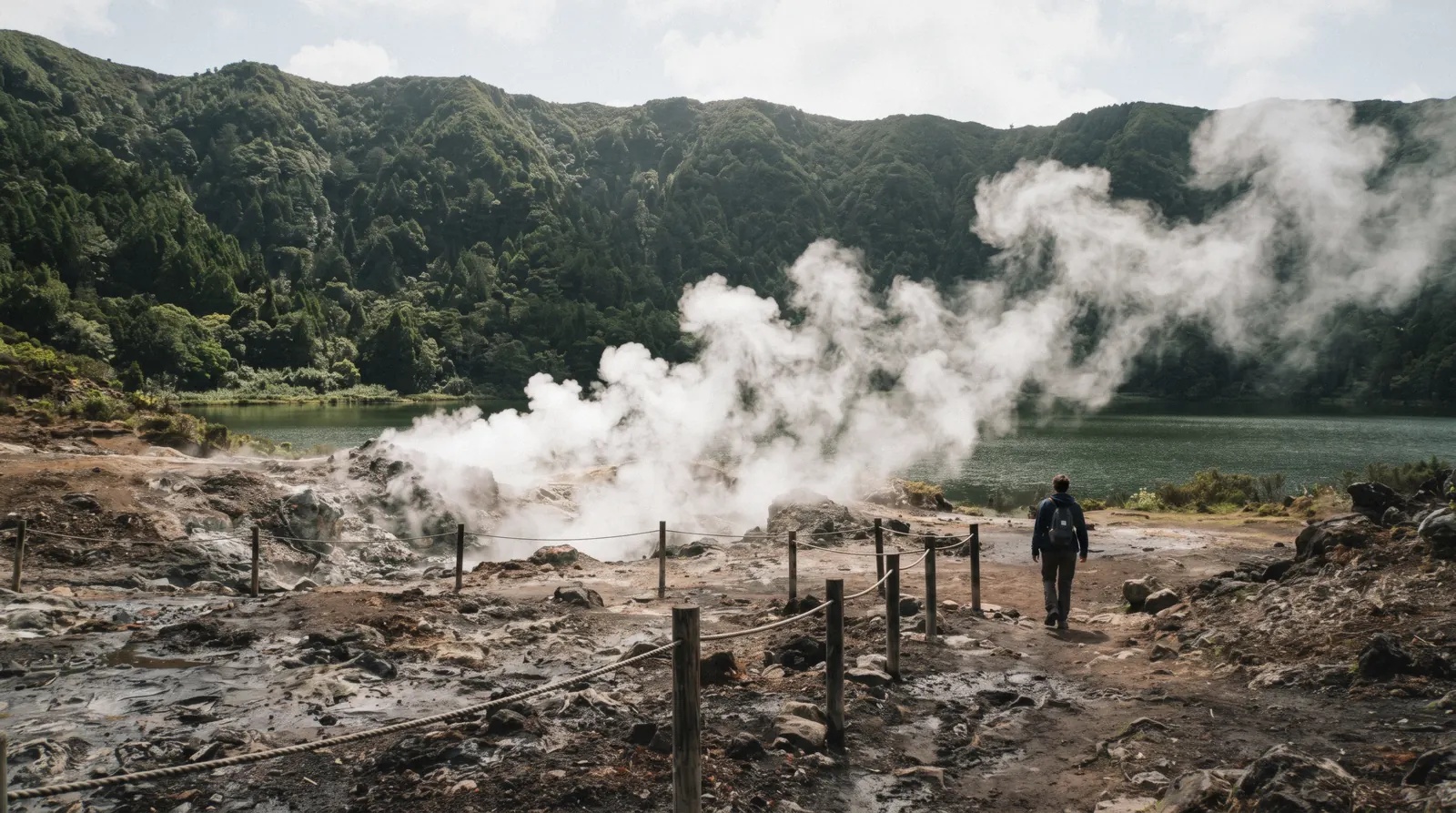
The village of Furnas sits in a live caldera: steam escapes through the streets, the lake shore hides rows of buried stew pots, and the iron-brown thermal pool at Terra Nostra has been the reason to come since the 18th century. Swim in a dark suit, the iron stains light fabric. Entry is $19.48 (€17).
Poça da Dona Beija after dark
Four lantern-lit pools under the Furnas waterfall line, run on arrival order rather than timed slots. The $13.75 (€12) day ticket becomes $18.34 (€16) for the evening session, and the last entry lands at 21:30, which makes this the standard pairing with a Furnas dinner. Rules and crowd notes on the page.
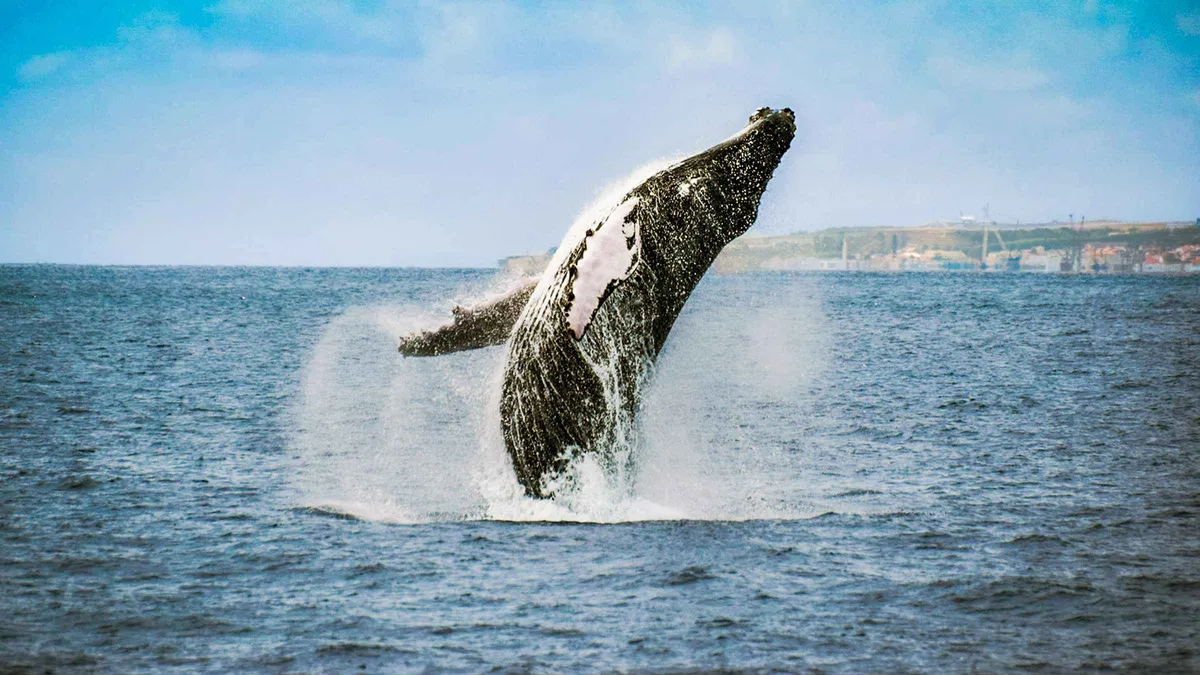
Whale watching from the south coast
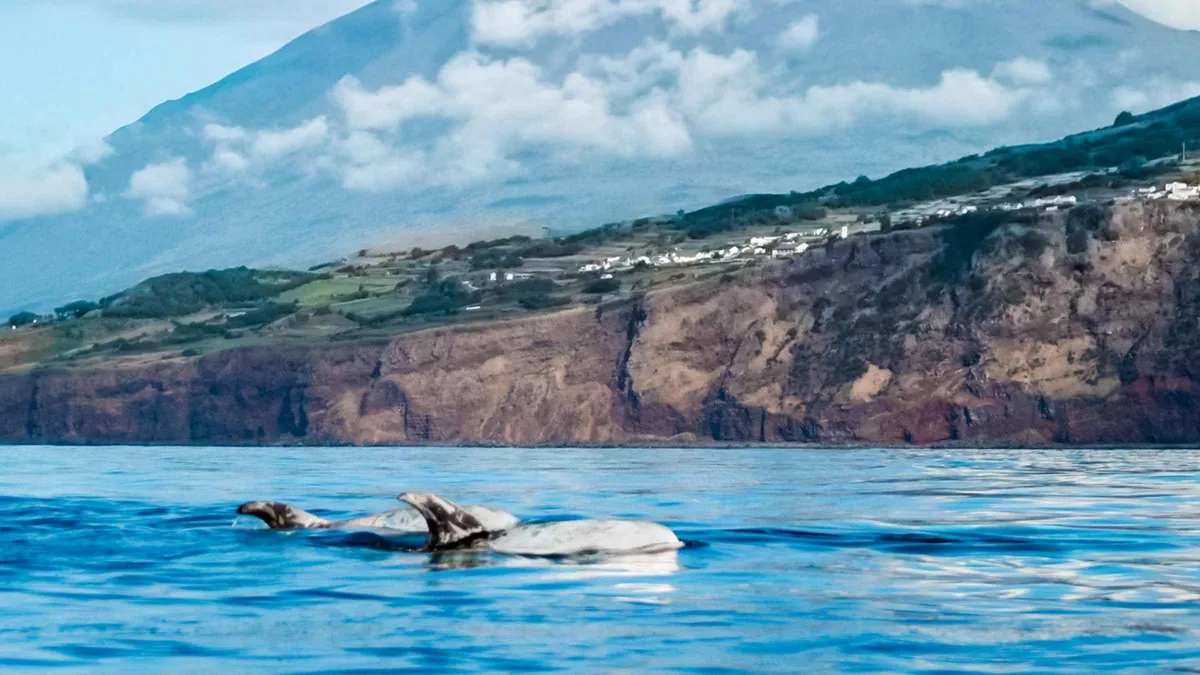
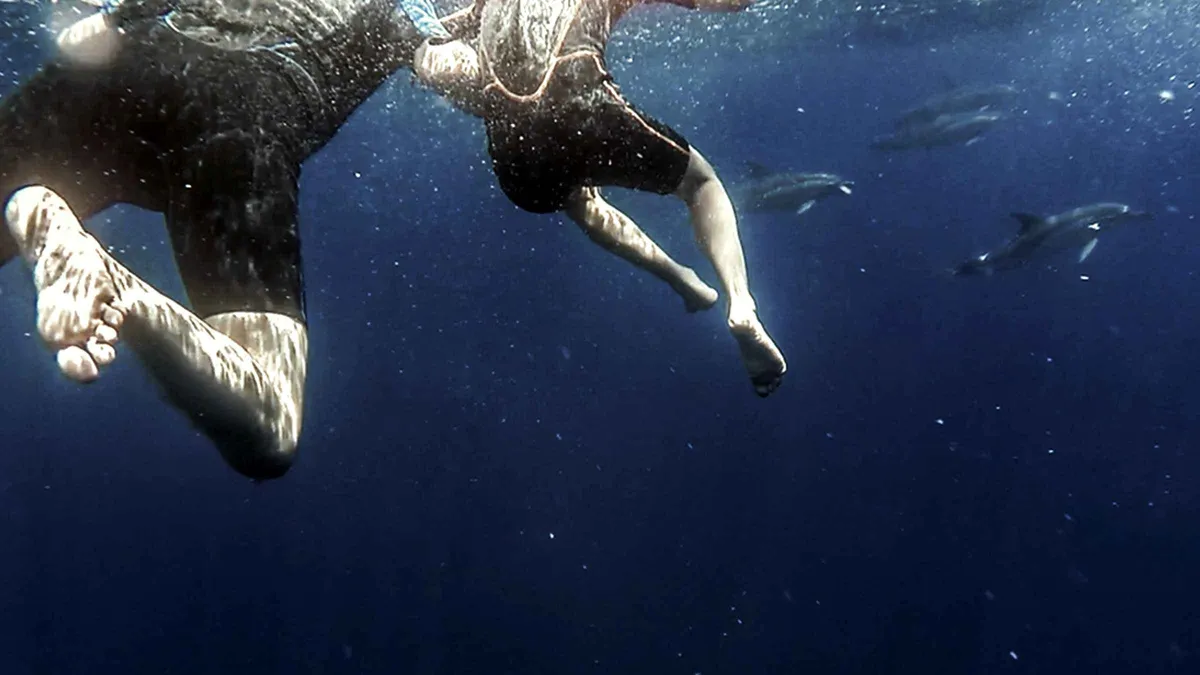
The islands sit on cetacean migration routes and the watch is licensed by regional law, with lookout towers feeding positions to the boats by radio. Sightings land on about 98% of trips year-round, blue whales trend late winter, sperm whales and spotted dolphins the summer. The whale watching hub compares ports and boats.
Gorreana and the north coast
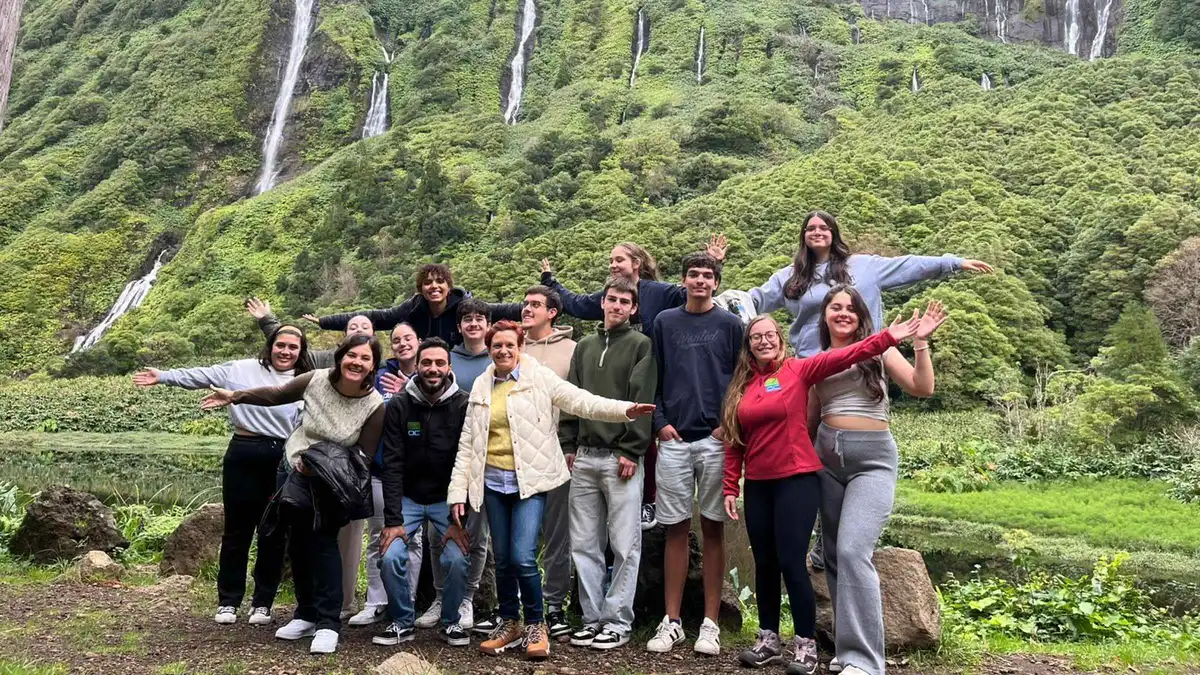
Europe's oldest tea plantation has worked these slopes since 1883, and the factory visit is free and unbooked. Pair it with the waterfalls at Ribeira dos Caldeirões and the Nordeste viewpoints for the greenest driving day on the island. Details on the Gorreana page.
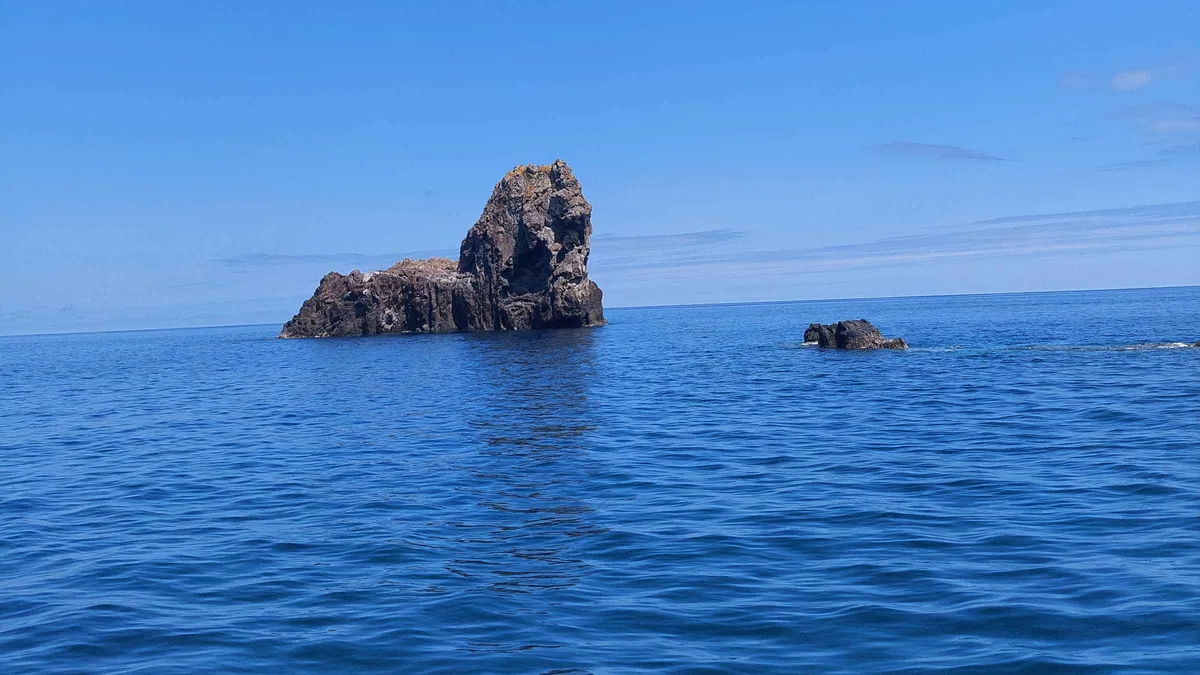
The Vila Franca islet
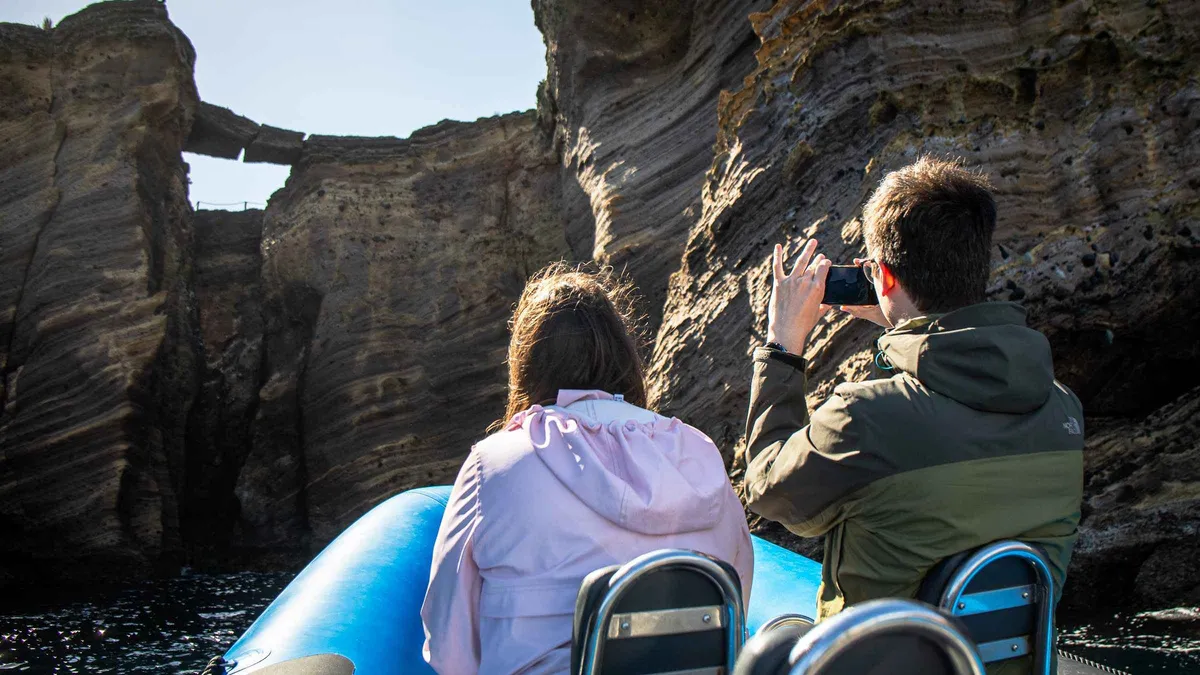
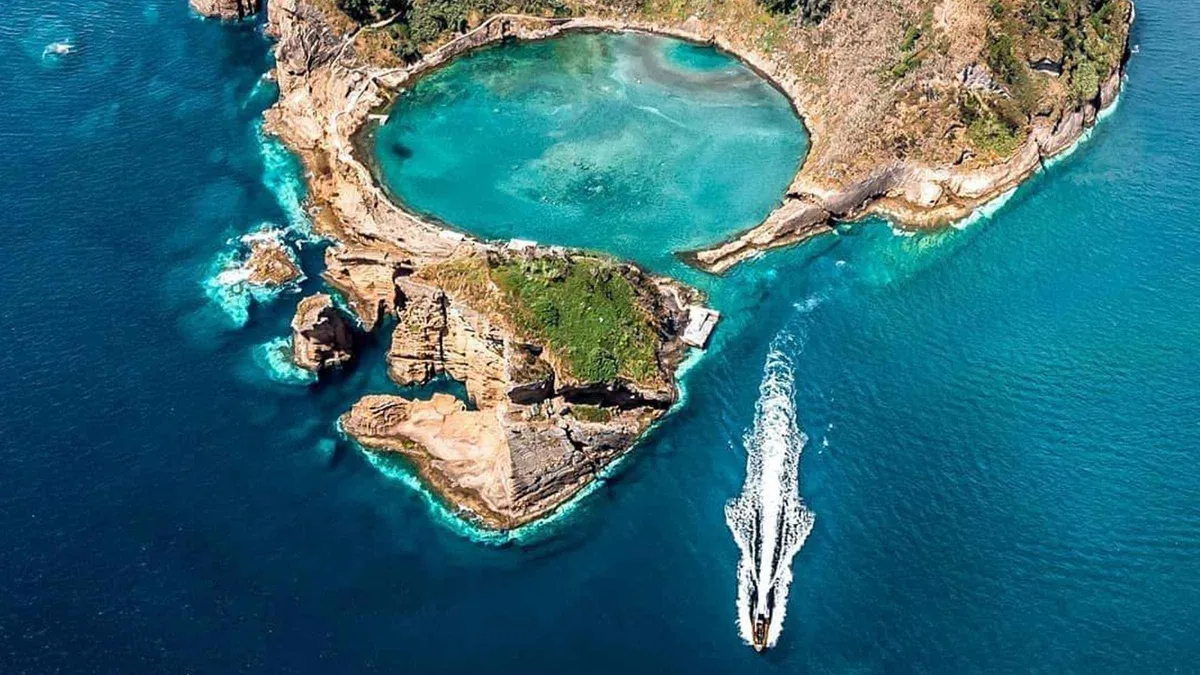
A flooded volcanic crater 500 m off the south coast, guarded as a nature reserve and open only in summer: the 2026 season runs 12 June to 11 October, capped at 400 visitors a day. Boats cross from Vila Franca marina from $22.73. The season and slot notes live on the Vila Franca page.
Mount Pico, from the triangle
At 2,351 m this is Portugal's highest point, a cone rising straight out of its own older crater. Climbing it is a booked, regulated ascent through the regional portal, guided or autonomous, and the weather window is called on the morning. Start at the mountain page.
 Guide to the Azores
 from $97.57
Small group
from $97.57
Small group