 Guide to the Azores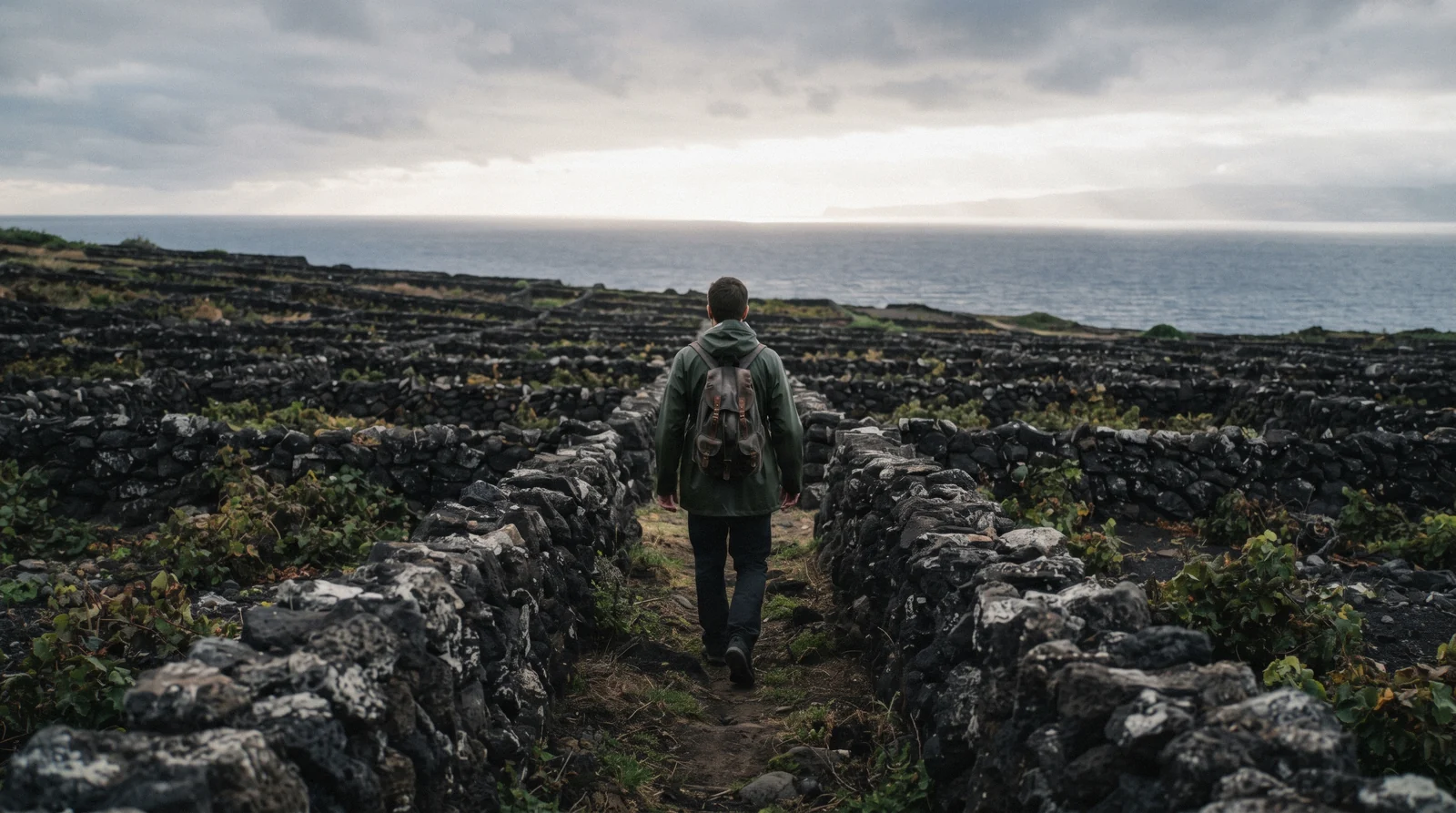
Pico Island, Azores: Vineyards, Whales and Portugal's Roof
Pico island is the Azores island you climb, drink and sail: it holds Portugal's highest point at 2350 m, a UNESCO vineyard landscape of black basalt walls since 2004, and whale watching from Lajes do Pico in waters Visit Azores calls one of the world's largest whale sanctuaries. This guide keeps the three stories straight, quotes only what the official sources publish, and names every figure the operators refuse to print. Pair it with pico mountain for the climb itself and the island pages next door, or start from the whole Guide to the Azores.
Quick answer
Pico island is 2,350 m of volcano wrapped in a UNESCO vineyard landscape, reached by ferry from Faial at Madalena and Cais do Pico or flown to directly from Boston.
Key takeaways
- The climb books only at pico mountain booking, and the price appears only inside the official app.
- Whale watching from Lajes runs year-round: Pico whale watching is the 3-hour card at $80.35.
- The vineyard landscape is free open ground. The currais walls at Criação Velha are the place to see it, and the islands overview puts all nine in context.
- No ferry fare is published as a page, so plan the crossing through the operator's search tool via getting around azores.
Key facts
Opening hours
| Island, trails and viewpoints | Open ground–No gates |
|---|---|
| Night climb registration window | 16:00–24:00 |
Admission
- Adult
- No island entry fee. The mountain reservation shows its price only inside the official booking app
- Free
- Whale watching runs year-round, charged per trip from $80.35 on the platform this site checks
Planning it
- Time needed
- No official figure exists for the island. Our estimate: 2 to 3 days covers vineyards, whales and the mountain base
- Book ahead
- Recommended — a few days
- Address
- Madalena ferry port, Pico Island, Azores
Pico Entry Points And What They Cost
The table compares the official mountain reservation portal with the two platform tours that carry most visitors to Pico, using figures from the portal's public text and the platform's listings. Conversions use €1 = $1.146.
Decide first whether the mountain is the point of the trip, because the climb is the only thing on Pico with an official booking, and even it shows no price outside its app.
| Option | Price | Includes | Cancel | Book |
|---|---|---|---|---|
| Climb reservation, official portalAnyone climbing, with or without the guide category. | Shown only inside the booking app | Your reservation and access to the mountain, day or night start | Not stated | Official site |
| Pico Island Full-Day Tour with a Local GuideA first visit that wants the vineyards and whaling towns run for them. This is not the climb permit. | From $200.88 | 8 hours, island highlights with a local guide | Operator's policy on the listing | Check Availability |
| Whale Watching Experience from Lajes do PicoAnyone who wants the whale sanctuary from the water, not the trailhead. | From $80.35 | 3 hours on the water, guided, 4.9 from 976 reviews | Operator's policy on the listing | Check Availability |
The portal's public text prints no price, no group size and no gear list: those sit only inside the booking app. A third-party figure of €15 (about $17.19) circulates online and is not official, so treat any climb price you see outside the app as unverified. in Q3 2026
Pico Tours Worth Booking
Two platform bookings cover most first visits to Pico island.
 from $200.88
Small group
from $200.88
Small group Pico Island Full-Day Tour with a Local Guide
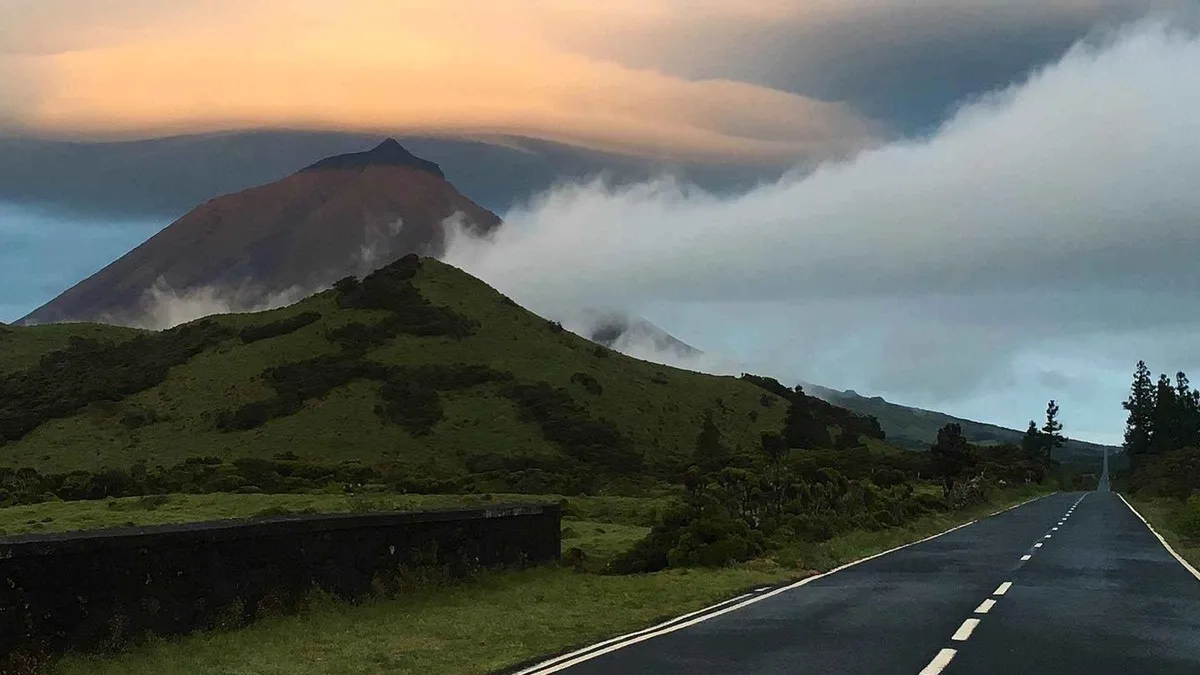
A full-day circuit of Pico island with a certified local guide, covering the UNESCO vineyard landscape, the Whaler Museum and the central plateau, with museum entry, lunch and transport throughout included. Pickup is not included by default and the meeting point is in front of Madalena ferry station, so plan to arrive there. Good for travelers crossing on the ferry who want the island's wine and whaling story told properly.
Check Availability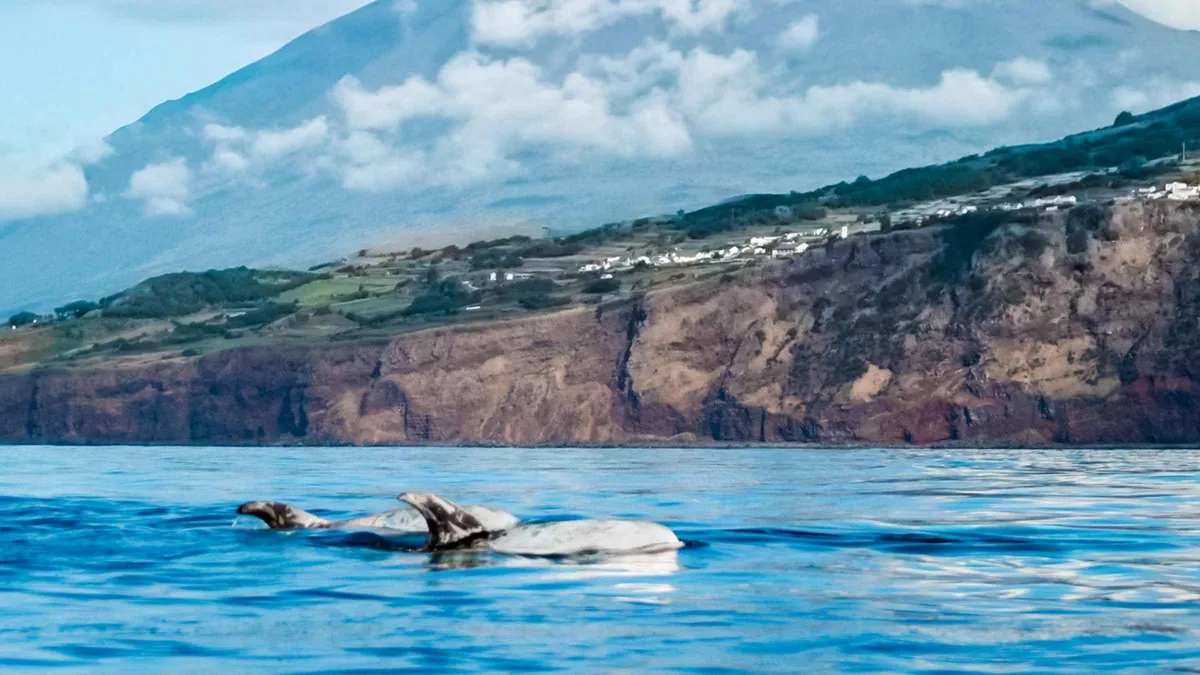 from $80.35
Pico Island: Whale Watching Experience from Lajes do Pico
A guided zodiac whale watching trip from Lajes do Pico with certified nature guides and marine biologists on board. Children under eight, pregnant travelers and people with back or heart problems are not admitted, and departures depend on weather and sea conditions. Good for travelers staying on Pico who want whale watching with expert eyes on board.
Check AvailabilityPrices, ratings and details are the platform's own. dollar figures are the listed prices — the platform bills in your account's currency.
Whaling Era To UNESCO Vineyards
Before tourism, Pico's economy ran on two trades: whaling and wine. Both left marks you can still walk through today. The dates of the end of whaling come from Wikipedia, with no official page fetched for this guide, so quote them with that caution.
The regional moratorium on whaling came in 1984, and the last whale was caught in 1987. The whale-boats did not disappear when the hunt stopped. They turned into the watching fleet that sails from Lajes do Pico today, in waters Visit Azores calls one of the world's largest whale sanctuaries, home to more than 20 cetacean species and with sightings reported on 98% of trips.
The vineyards went the other way: instead of ending, they earned the highest recognition. The Landscape of the Pico Island Vineyard Culture has been a UNESCO World Heritage Site since 2004, honoured as an outstanding example of farming adapted to a remote and difficult environment. The whale story and the wine story together explain the island you see now, and you can meet both in a single day, with a morning at the currais and an afternoon boat.
For the wider picture across all nine islands, see whale watching azores.
What To See On Pico Island
Five stops cover the mountain, the vines, the port town and the whales.
Mount Pico and the Piquinho cone
Visit Azores prints the summit at 2350 m, the highest point of Portugal, with a lava cone called Piquinho standing in the crater with fumaroles. The climb begins at approximately 1,250 m, so you gain a serious amount of height in one push. Some sources give the summit as 2,351 m, but Visit Azores prints 2,350 m, and that is the figure used here.
No climb duration is published by any official source, so plan by the booking rules rather than a claimed walking time. The full regulations, the night start window and the booking truth live on pico mountain.
The currais at Criação Velha
The currais are squares delimited by basalt walls where grapevines grow, and they are the signature image of the island. Visit Azores names Criação Velha and Santa Luzia as the best examples of the landscape. The walls run in a grid down to the sea, sheltering each vine from the Atlantic wind.
This is free open ground with no gates, no tickets and no hours, so you can walk it whenever the light suits you. Late afternoon is the classic time, when the low sun warms the black stone. Wear real shoes, because the ground between the walls is rough lava surface.
Madalena and the ferry frontage
Madalena is the port most visitors arrive at, on the ferry line from Faial, and it is the base for the wine country that spreads out from the waterfront. The Museu do Vinho do Pico sits in town, and it is exactly the kind of place where honesty matters: it has no official page, no published hours and no published price, which is the current state of the record. Ask locally on arrival rather than planning a visit around a timetable that does not exist.
For the crossing itself and what Faial offers on the other side, see faial.
Lajes do Pico, whale country
Lajes do Pico is the departure point for the whale boats, and it sails year-round. The old whaling tradition turned directly into the watching industry, so the town's history and its main activity are the same story. Sightings are reported on 98% of trips in these waters, which Visit Azores ranks among the world's largest whale sanctuaries, with more than 20 cetacean species.
The 3-hour guided trip costs from $80.35 and is rated 4.9 by 976 travellers on the platform this site checks. Book it for early in your stay so bad weather leaves you a spare day: Pico whale watching.
The wine, in the landscape itself
You do not need a cellar door to taste Pico's wine culture, because the landscape itself explains it. Visit Azores names the parts: maroiços are piles of cleared black rock stacked by hand where the vines wanted to grow, rola-pipas are barrel slides built to roll casks down to the boats, and lajidos, also called terras de biscoito, are the bare lava fields the whole system was carved out of. Walk any lane between Madalena and Criação Velha and you will pass all three.
It is a working farming landscape, inscribed by UNESCO, not a museum set.
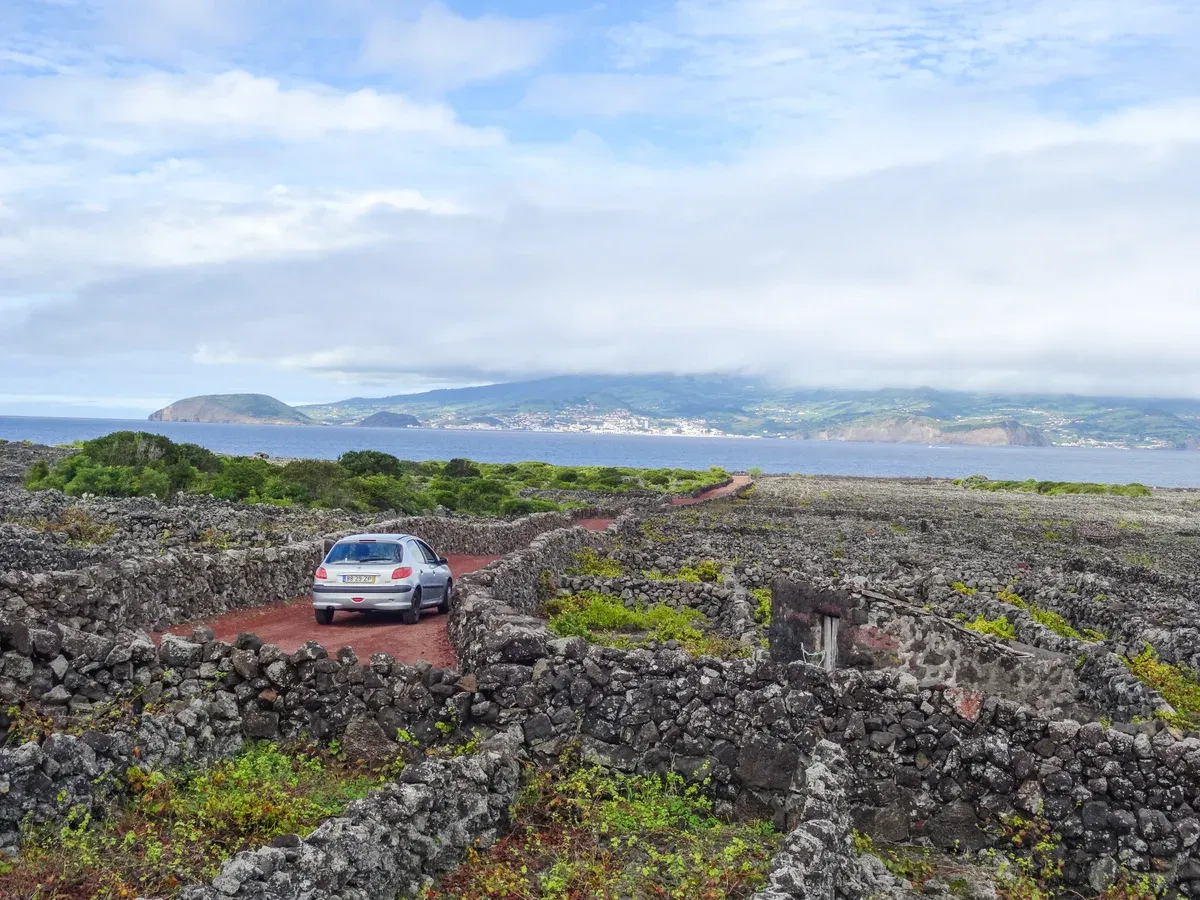
The UNESCO Vineyard Landscape: Currais And Maroiços
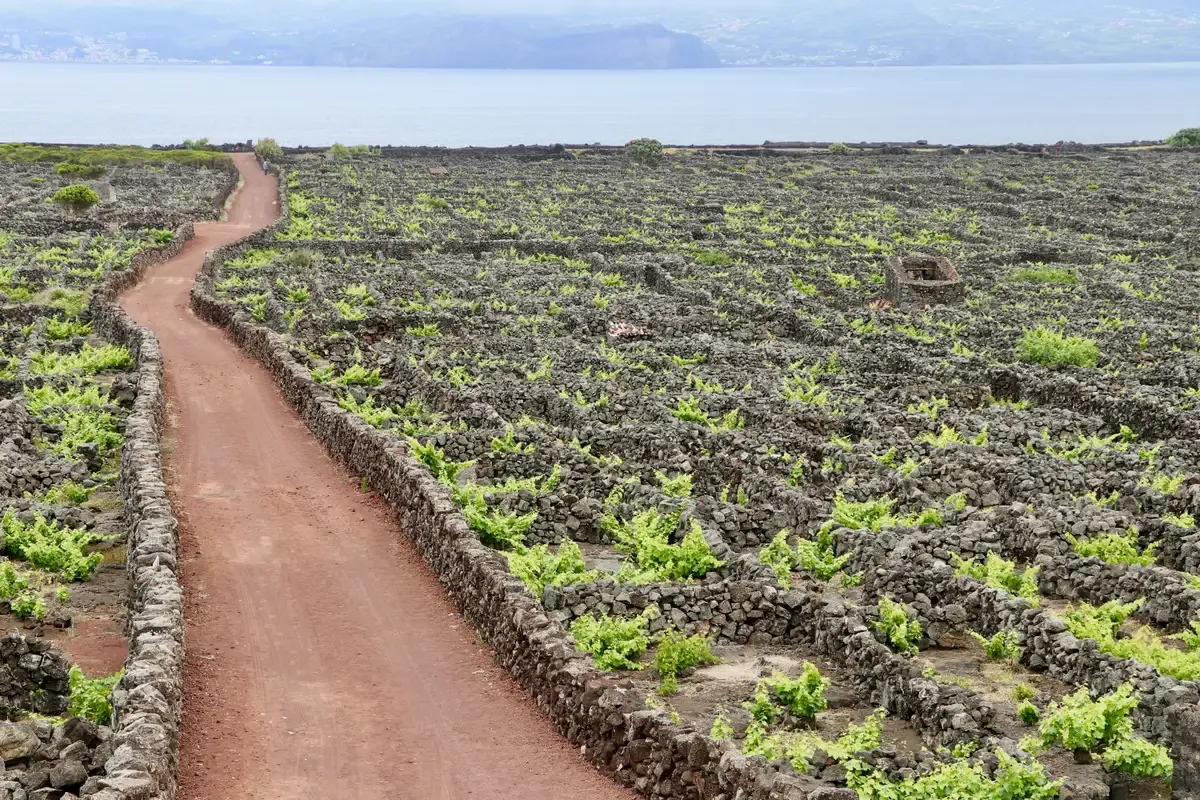
The Landscape of the Pico Island Vineyard Culture was inscribed by UNESCO in 2004 under criteria (iii) and (v). The protected property covers 987 ha, with a buffer zone of 1,924 ha around it. UNESCO's own line is that the landscape is an outstanding example of the adaptation of farming practices to a remote and challenging environment.
In plain words, here is what the walls do. Pico's vineyards grow on bare lava coast, exposed to Atlantic wind and salt spray that would strip a naked vine. So growers cleared the black rock by hand and built low square enclosures, the currais, each wall protecting the vines inside it from the wind, shielding them from salt, and holding a little of the day's heat in the stone so the grapes ripen at all.
The rock they cleared went into the maroiços, the piles you see stacked across the fields. The same logic produced the rola-pipas, the slides for rolling barrels down to the shore. It is farming as engineering, built over centuries on ground that should not grow anything, and it is why the landscape earned World Heritage status.
Hours, Booking Windows And When Pico Is Busy
The island itself is open ground with no gates, so hours belong to the three things that ticket or book. The mountain is the one official transaction: night climbs start between 16:00 and 24:00, with a mandatory presentation at Casa da Montanha in Madalena before you go up. Casa da Montanha's own opening hours are not stated on any official page, and the reservation portal's price sits inside its booking app, not on the public text.
Plan to check both when you book at pico mountain booking. The whale fleet is the second scheduled thing, and it sails year-round, with sightings on 98% of trips, so the weather matters more than the season. The wine museum publishes nothing, neither hours nor price, so treat any visit there as opportunistic.
For crowds, summer is the busy stretch on the ferries, our estimate, because the triangle lines from Faial and São Jorge run fullest then. Book the mountain reservation and the whale trip ahead, and walk the vineyards whenever you like, since they never close.
Getting To Pico: Flight PIX Or Ferry From Faial
By air, you can land on Pico itself. Azores Airlines sells Boston to Pico (PIX), and also Toronto and Montreal to PIX, so North America can reach the island directly without touching another island first. That makes the mountain and the vineyards a single-ticket trip from the eastern seaboard.
By sea, Atlânticoline's Pico ports are Madalena and Cais do Pico, on the lines that link the central islands with Faial and São Jorge. But the operator's timetable is a dynamic search tool: static crossing times, frequencies and per-route fares are NOT published as pages. The often-quoted half hour for Horta to Madalena appears nowhere on the operator's site, so no minutes figure belongs here, and no fare table either.
Run the search in the operator's tool for your date and take what it returns. One trap to avoid: there is no Ponta Delgada ferry port, so from São Miguel the move to Pico is a flight, not a boat. For the full arrival picture across the archipelago, see getting to the azores.
How Many Days You Need On Pico
No official source publishes visit durations for the island, so the routings below are our estimate.
Routing by the days you have
The table matches your stay to the island's three headlines.
| If you have | Do this | Money | Why it works |
|---|---|---|---|
| Half a day | Ferry in, Madalena, the currais at Criação Velha | $0 for the landscape | The UNESCO walls sit nearest the port |
| One full day | Add the 3-hour whale trip from Lajes | From $80.35 | Year-round sailing, 98% sighting rate |
| Two days | Day 1 island, day 2 the mountain base and Casa da Montanha | Reservation price inside the app | The night window runs 16:00 to 24:00 |
| Three days | All of it, with a weather buffer | See the table above | Mountain weather calls are the risk |
What the money figures are
One closing note on money. The only climb-related figure the portal publishes in its public text is the night window, 16:00 to 24:00, and everything else about the reservation sits inside the booking app. The two tour prices in the table, from $80.35 and from $200.88, are the platform's own listings, not official island tariffs.
Pico Island In Dated Lines
-
1984
Regional whaling moratorium
Wikipedia-sourced, no official page fetched
-
1987
The last whale caught off the Azores
Wikipedia-sourced
-
2004
UNESCO inscribes the vineyard landscape
whc.unesco.org, criteria (iii) and (v), 987 ha
-
2020
Portaria n.º 25/2020 sets the mountain access rules
Regulamento de Acesso à Reserva Natural da Montanha do Pico
-
2023
First amendment, Portaria n.º 64/2023
Diário da República reference, read as a snippet only
Sources: facts packs with Wikipedia flagged where used, UNESCO, Diário da República snippets.
Do And Do Not On Pico
Do
- Book the climb reservation before you fly, the night window fills
- Check the booking app for the price on your date, because no site prints it
- Walk the currais at Criação Velha late afternoon, the walls glow at low sun, our estimate
- Book Pico whale watching for your first morning, so a cancelled trip has a spare day
- Carry the layers the mountain app asks about, the summit sits at 2350 m
Don't
- Do not repeat the half-hour ferry figure, the operator publishes no crossing time
- Do not call a guide mandatory, the portal sells an autonomous ascent
- Do not trust the €15 climb figure, it is not official
- Do not plan the wine museum around published hours, none exist
- Do not look for a Ponta Delgada ferry, there is no such port
Five Things Most Visitors Do Not Know About Pico
- The portal's booking form offers an autonomous ascent without guide, Subida autónoma sem guia, so the blog claim that guides are compulsory is unproven (montanhapico.azores.gov.pt).
- The climb price, group size and gear list sit only inside the reservation flow, and a third-party €15 figure is not official (montanhapico.azores.gov.pt).
- Visit Azores prints the summit at 2350 m while other sources use 2,351 m (visitazores.com).
- The vineyard landscape carries a 1,924 ha buffer zone around its 987 ha property (whc.unesco.org).
- The whale statistics: more than 20 cetacean species, sightings on 98% of trips, and watching possible year-round (visitazores.com).
Pico Island Map: Ports, Vineyards And The Mountain
Next From Pico
Pico Island Questions
Is Pico Island worth visiting?
Yes, if one of the three headlines is yours. The climb gives you Portugal's highest point at 2350 m, the UNESCO vineyard landscape gives you a walk through the currais at Criação Velha for free, and the whale boats sail from Lajes year-round with sightings on 98% of trips. The honest counter-case: the official sources describe no beaches to speak of, and the ferry timetable takes work because Atlânticoline publishes no static crossing times or fares. If none of the three headlines moves you, the island may feel thin. If the mountain is yours, start with the rules at pico mountain.
What is Pico, Azores known for?
Three things. First, the summit: Visit Azores prints the mountain at 2350 m, the highest point of Portugal, with the Piquinho lava cone in the crater. Second, the vineyards: the Landscape of the Pico Island Vineyard Culture has been a UNESCO World Heritage Site since 2004, with the basalt currais walls at Criação Velha and Santa Luzia as the best examples. Third, the whales: the waters off Pico sit in what Visit Azores calls one of the world's largest whale sanctuaries, with more than 20 cetacean species and sightings on 98% of trips, watched year-round from Lajes do Pico. See whale watching azores for the season and the ports.
How many days do you need in Pico?
No official source publishes visit durations for the island, so this is our estimate: 2 to 3 days covers the three headlines properly. With two days, take day 1 for the vineyards, Madalena and the whale trip, and day 2 for the mountain base and Casa da Montanha, since the night climb window runs 16:00 to 24:00. A third day adds a weather buffer, which matters because mountain weather calls are the main risk to a booked climb. With only half a day from a Faial ferry, the currais at Criação Velha sit nearest the port and cost nothing. The routing table above matches each stay length to a plan.
Can you climb Pico without a guide?
The portal's own booking form sells an autonomous ascent category, Subida autónoma sem guia, so yes, an unguided climb exists as an official option, and repeated blog claims that a guide is compulsory are unproven. The access rules live in the Regulamento de Acesso à Reserva Natural da Montanha do Pico, set by Portaria n.º 25/2020 and first amended by Portaria n.º 64/2023. What nobody publishes openly is the price, the group size or the gear list: those appear only inside the booking app. Reserve ahead at pico mountain booking and check the terms for your date there.
How do you get to Pico island?
Two ways. By air, Azores Airlines sells direct tickets to Pico (PIX) from Boston, and from Toronto and Montreal, so North America can land on the island itself. By sea, Atlânticoline serves the Pico ports of Madalena and Cais do Pico, mainly on the lines linking Faial and São Jorge. Be aware that the operator's timetable is a dynamic search tool: static crossing times, frequencies and per-route fares are not published as pages, and the familiar half-hour Horta to Madalena figure appears nowhere on the operator's site. There is no Ponta Delgada ferry port, so from São Miguel the move is a flight. See getting around azores.
How much does it cost to visit Pico island?
The island itself is free: no entry fee, and the vineyard landscape is open ground. The priced items are the activities. The 3-hour whale trip from Lajes starts at $80.35 and is rated 4.9 by 976 travellers. The 8-hour full-day island tour with a local guide starts at $200.88. The climb reservation is the odd one: it is the only official transaction on the island, and its price is shown only inside the booking app, with no figure on the public portal text. A circulating third-party figure of €15, about $17.19, is not official. Book and verify at pico mountain booking.
Pico Island On Film
IN THE MOOD FOR AZORES: PART 2 | Pico Island | Travel Guide to Azores (Açores), Portugal
A slow tour of the island's vineyards and towns.
Video: In the Mood for LifePico Island, Azores 🇵🇹 | Volcanoes, Vineyards & Island Life
The three headlines of this page in motion.
Video: Sweet Sour TravelDiscover the highlands of Pico Island - Azores, Portugal - Escape 20 minutes from the coast - Ep 267
The island's interior, beyond the ports.
Video: Discover Pico Island with Carlos & LauraVideos load from YouTube only when you press play.
We may earn a commission if you book through one of our links, at no extra cost to you. Full affiliate disclosure