 Guide to the Azores
Azores Packing List: Layers for Four Seasons in One Day
An Azores packing list is not a beach list with a mildew problem, and it is not a hiking list either. It is a layer system for an ocean climate where Ponta Delgada averages zero days a year above 30°C, zero frost days, and 122 days with measurable rain. The numbers come from the IPMA climate normals, and our Azores weather guide carries them month by month. This page turns those normals into a packing decision, item by item, including the one rule almost every list misses: dark swimwear for the iron pools of Terra Nostra. The whole archipelago is planned on Guide to the Azores.
Quick answer The packing list in one paragraph
Pack in three layers, base, warm mid and a proper rain shell, because the same day can deliver all four seasons. Ponta Delgada's normals run from 17.5°C daytime highs in January to 26.0°C in August, with 122.3 rain days a year and no month you can call dry. Add broken-in walking shoes for the official trails, a dark swimsuit for the iron-rich thermal pools, and a windproof layer if Pico or a boat trip is on the schedule. Skip the beach wardrobe, the sea only reaches the low 20s in late summer.
Key takeaways
- The island never really gets hot: on average zero days a year reach 30°C, and only 60.8 days a year clear 25°C, which our weather guide shows month by month.
- It never really gets cold either: the record low at Ponta Delgada is 5.0°C, so insulation means a fleece, not expedition kit.
- Rain is spread across the whole year, 122.3 days at or above 1 mm, which is why the shell goes in the case for every month, not the umbrella.
- The thermal pools run on iron water that stains light fabric, so the swimwear that matters at Terra Nostra is dark.
The Numbers Your Suitcase Answers
These are the IPMA 1991 to 2020 climate normals for Ponta Delgada's observatory station, the official series behind every packing rule below, read at the four corners of the year.
| Month | Mean daily high | Mean nightly low | Mean precipitation |
|---|---|---|---|
| January | 17.5°C | 12.7°C | 102.1 mm |
| April | 18.8°C | 13.3°C | 79.6 mm |
| July | 24.7°C | 18.9°C | 26.0 mm |
| October | 22.6°C | 17.1°C | 118.0 mm |
IPMA normals 1991 to 2020, Ponta Delgada Observatório Afonso Chaves, station 513.
The Climate Numbers Behind the List
Four seasons in a day is not a slogan here, it is what an ocean climate at 37 degrees north does. The annual mean temperature at Ponta Delgada is 18.2°C, and the spread between the coldest and warmest monthly means is only about 8 degrees. What changes the day is not the season, it is the cloud, the wind and a shower. December is the wettest month at 152.8 mm, July the driest at 26.0 mm, and even July averages 4.8 rain days.
The extremes tell the packing story best. The hottest day ever recorded at the observatory is 30.1°C, the coldest 5.0°C. Average years contain not a single day at or above 30°C and not a single frost. That means no air-conditioning anxiety, but also no guarantee of beach weather in July, and mornings on the crater rims that sit ten degrees below the coast.
Two planning notes follow from the same numbers. The islands run an hour behind Lisbon, so summer light lasts long into the evening and early starts feel brutal. And the sea off São Miguel, modelled daily over 2020 to 2024, averages roughly 16.6°C at its coolest in March and 24.9°C at its warmest in August, which makes it a swim, not a soak, unless you are in a thermal pool. The full monthly series sits in our Azores weather guide.
The Layer System
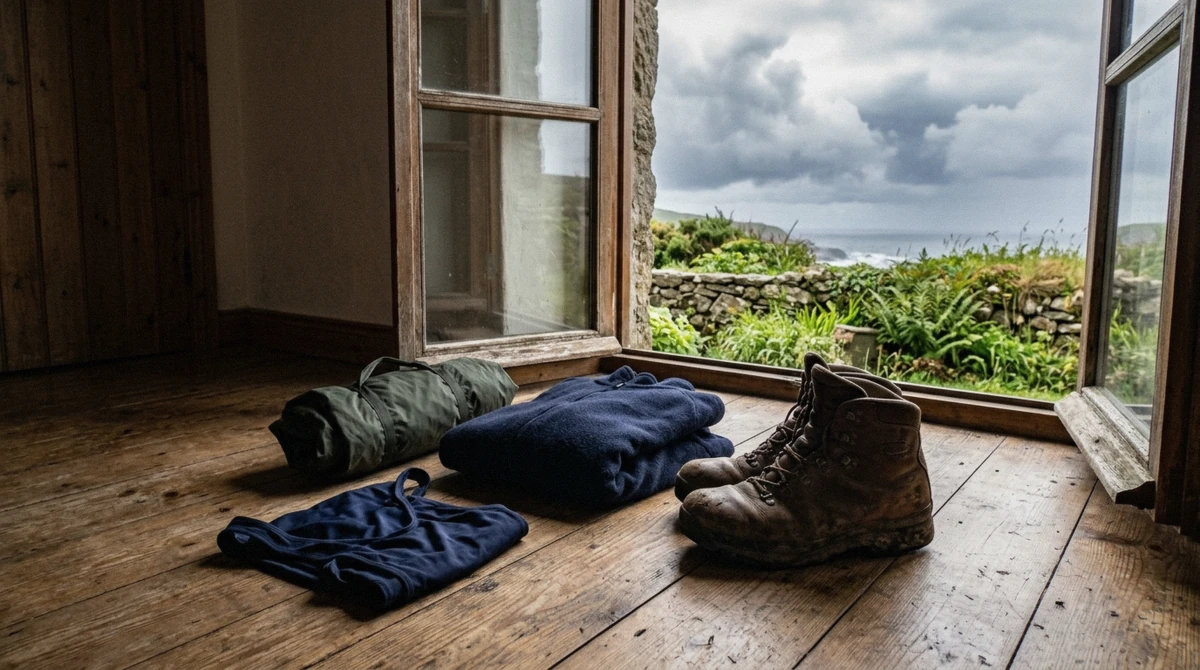
Build the case around three layers. The base is quick-drying synthetics or merino, short sleeve for July afternoons and long sleeve for everything else. The mid is a fleece or light insulated jacket, because a 24.7°C afternoon in July still ends in an 18.9°C evening, and crater viewpoints run colder than the coast. The shell is where most lists undersell the islands: a real waterproof jacket with a hood, not a packable windbreaker, because the rain that totals 987.5 mm a year arrives sideways on the ridges.
Then the accessories the climate actually justifies. A warm hat and light gloves live in the daypack from November to March, and on Pico year-round. Sunglasses and sunscreen matter more than the latitude suggests, because Atlantic sun between showers is fierce. A small daypack with a rain cover carries the shell you took off at lunch. Quick-dry everything, because hotel drying racks and ocean humidity are slow.
What to leave home: the beach wardrobe, the hairdryer-sized towel for thermal pools where towels rent on site, and shoes you cannot get wet. Trails, puddles and grass are the ground floor of the islands.
Dark Swimwear: The Rule Most Lists Miss
The thermal pools of Furnas and the island's other baths run on iron-rich geothermal water, and iron stains. Terra Nostra states it plainly in its own pool rules: the water's high mineral content, iron included, discolours light fabrics and can affect hair and nails, dark swimwear is advised, and swimwear should be washed before it dries. Poça da Dona Beija recommends a swim cap for the same chemistry and sells one at the desk for a €1 coin, and warns that jewellery may discolour too.
So the packing rule is cheap. One dark, cheap-to-you swimsuit does the thermal work, and any pale designer suit stays at the hotel or goes in the sea instead. A swim cap, if your hair is light or dyed, costs a euro at the desk rather than a baggage slot.
No bath on the island requires a cap, which the hot springs hub checks venue by venue, but the staining warnings are official and the water is the same iron-rich chemistry across the valley. Wash the suit the same evening, before it dries, and it survives the trip.
Footwear and the Trails
The walking decides the shoes, so decide the walking first. The official trail network grades everything for you: Sete Cidades' three routes are all easy, the Lagoa do Fogo circuit is a 12 km medium day, and the network as a whole runs on grass, lava gravel and stone staircases that stay wet most of the year. Broken-in trail shoes with a grip sole are the single best item in the case, and our Azores hikes guide sorts the network by island and grade so you can match shoes to plan.
For the highest ground the requirement hardens. Mount Pico starts from about 1,250 m and tops out at 2,350 m, and the mountain's own booking and gear guidance expects proper mountain kit rather than trail runners, with night climbs presenting at Casa da Montanha before a midnight summit push. If that climb is on the itinerary, pack dedicated boots and windproof layers, and read the Pico mountain gear section before you close the case.
Town and coast need nothing special. Ponta Delgada's pavements are the smooth black basalt of every Portuguese city, and the caldeiras boardwalks of Furnas are short, but both punish thin-soled summer sandals after rain.
What the Sea and the Boats Demand
Whale watching runs all year in the Azores, with more than 20 cetacean species recorded and sightings reported on 98 percent of trips, which means the boat layer goes in the case in every month. Zodiac trips hand out suits on many departures, but the harbour mornings are damp and the Atlantic wind carries a chill in July that the land never shows. A windproof mid layer earns its space on the water.
For swimming, work with the normals rather than against them. The sea near São Miguel averages roughly 17°C in winter months and the low 20s by late summer, so most swimmers want the calm of a sheltered bay in August or September and a towel they do not mind using on black rock. The ocean pools at Ferraria and the beach at the bottom of Lagoa do Fogo are the memorable swims, and both sit at their best on calm, low-wind days.
One last sea-adjacent item: motion-sickness tablets if the boat trip is booked, because the Azores sit in open Atlantic swell and the whale boats run in it on purpose.
Adjust the List to the Trip
If you are packing for July or August
The shell still goes in. Normals put July at 24.7°C with 4.8 rain days, and the crater rims run ten degrees colder than the coast. Swimwear for the sea plus a dark suit for the iron pools covers both waters.
If you are packing for December to March
Winter here is 17.5°C and wet, not cold. Fleece plus shell plus the warm hat, and book the soak-heavy days: the baths run all year, and Poça da Dona Beija keeps pools open to 23:00.
If Pico is on the itinerary
Add mountain boots, windproof shell layers, hat and gloves, and book the climb through the official portal first. The gear and booking rules list what the mountain expects you to carry.
If you are living out of a carry-on
Three layers, two pairs of shoes maximum, quick-dry everything. The wash-and-wear cycle matters more than outfit count in a climate where nothing dries fast.
Azores Packing List: Questions
Do I really need a rain jacket in summer?
Yes. July is the driest month and still averages 4.8 days with at least 1 mm of rain, against 122.3 rain days in the average year. The rain is rarely an all-day event, which is exactly why the shell beats the umbrella: it packs into the daypack, goes on at the viewpoint and comes off at lunch. The month-by-month figures behind this sit in our Azores weather guide.
What swimwear do the thermal pools need?
Dark. Terra Nostra's own rules warn that the iron-rich water stains light fabrics and can discolour hair and nails, and that swimwear must be washed before it dries. Poça da Dona Beija recommends a swim cap for light or dyed hair and sells one at the desk for a €1 coin, and no bath on the island makes a cap compulsory. Bring one dark suit for the baths and whatever you like for the sea.
Which shoes should I pack?
Trail shoes with a grip sole, worn in before you fly. The official trails run on wet grass, lava gravel and stone steps, and even the easy Sete Cidades routes deserve real soles, as our Azores hikes guide argues trail by trail. Add dedicated mountain boots only if the Pico climb is booked, because its gear expectations are a step above the island's ordinary trails.
Is the Azores cold in winter?
By most European standards, no. Ponta Delgada's January normal is 17.5°C by day and 12.7°C by night, and the coldest temperature ever recorded at the station is 5.0°C. Frost does not occur in the average year. Winter packing means a fleece and a waterproof, not a heavy coat, with the warm hat reserved for open ridgelines and boat decks.
Do I need to pack food or water gear?
Neither beyond the ordinary. Tap water is drinkable and a small refillable bottle covers the trails, and the towns have supermarkets and pharmacies for anything forgotten. The one food-adjacent item worth packing space for is a daypack snack for crater days, because the famous viewpoints sit a drive from the last café and the weather window can be a short one.
How different is packing for Terceira or the triangle islands?
Barely. The ocean climate runs across the archipelago, and the same three layers work from Santa Maria to Flores. The differences are altitude and boats: Pico's mountain adds the mountain kit described above, and the ferry triangle adds the windproof layer for crossing decks. For how the islands differ on the ground, our islands guide carries the short version of each.
Packing for the islands on video
Three films from travellers packing and living the same climate, useful for calibrating how much jacket a 24.7°C summer afternoon really needs.
A Week in the Azores Islands | Explaura
A week of outfits against a week of weather, which is the real test.
Video: ExpLauraMinimalist pack with me | 5 Days in Acores, Portugal
Carry-on scale packing for exactly the five-day window most trips use.
Video: TracyMAzores: Your Perfect Arrival Day Itinerary on São Miguel, Azores, Portugal
What gets worn on day one, when the case is least organised.
Video: Noemi MikleLinked as published on YouTube. We have no connection to these channels.