 Guide to the Azores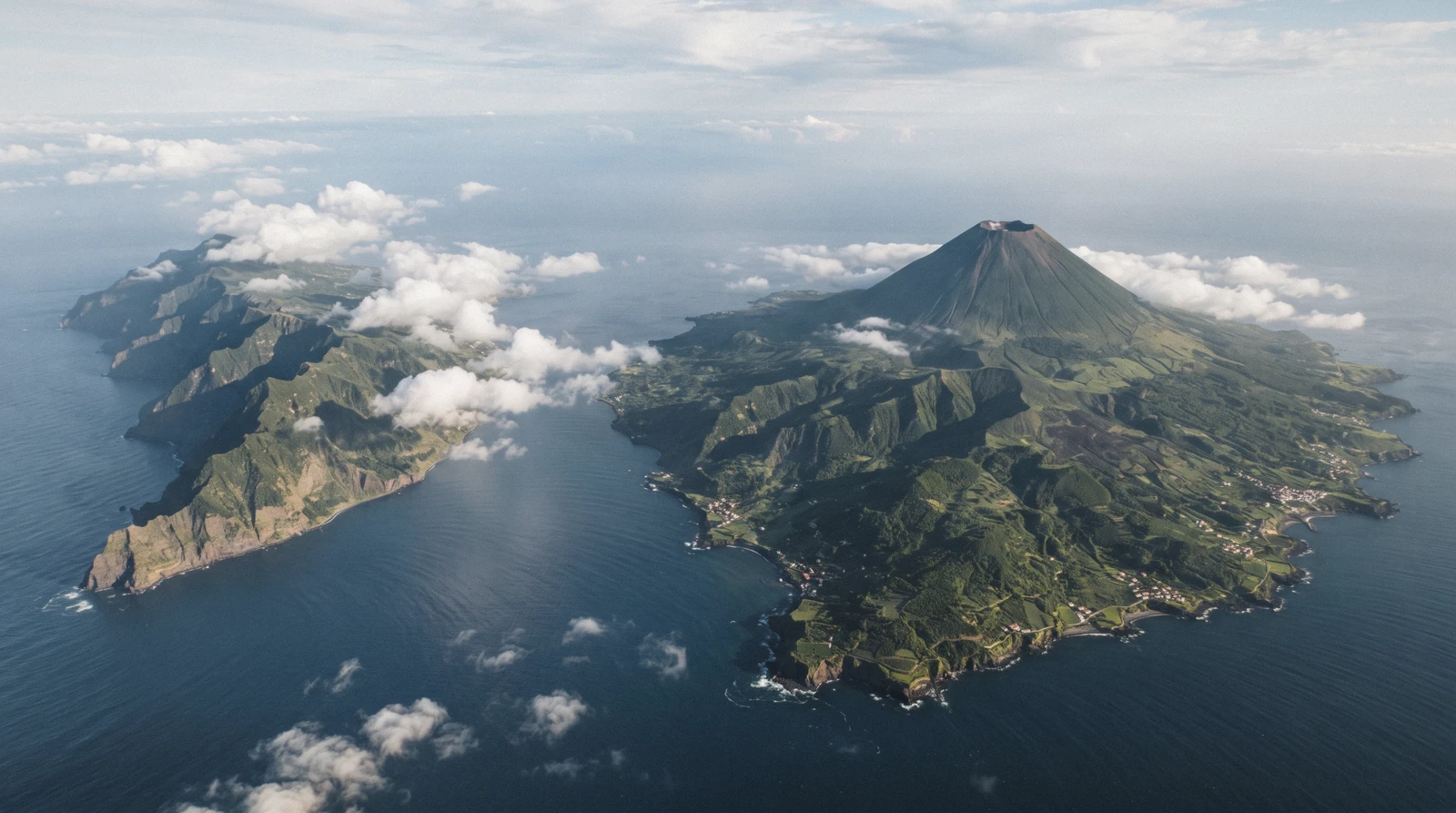
The Azores Islands: All Nine, and Which One to Pick
The Azores islands are nine separate islands with three separate transport realities: one base island with the international airport, a ferry group in the middle, and islands you reach by air or not at all. This guide splits them that way, because 'the Azores' is never one place. It names the record each island holds, the honours UNESCO has given two of them, and every fare the operators refuse to publish. For the base island's sights, start at things to do in the Azores, and for the whole site, the Guide to the Azores is the front door.
Quick answer Nine islands, two UNESCO sites, one ferry group and the pick-your-island verdict
The Azores are nine volcanic islands in the Atlantic. Two carry UNESCO World Heritage status: Angra do Heroísmo, inscribed in 1983, and the Pico vineyard landscape, inscribed in 2004. Ferries link seven islands, and the network has no São Miguel port. Six of the nine islands take direct flights from North America. The clock runs 1 hour behind mainland Portugal, an offset Wikipedia sources because no official page publishes it. Pick Pico for the climb, Terceira for history, Faial for the marina, Flores and Corvo for the far west.
Key takeaways
- Decide on Pico island if Portugal's highest point is the goal, the climb needs a reservation.
- Lock the day trip early with the Terceira full-day tour, 8 hours covering the island's highlights.
- Plan the hops with getting around the Azores, ferries and flights covered.
- Time the trip with the best time to visit, month by month.
The Nine Islands At A Glance
This table compares all nine islands on what each one is known for, how you reach it, and the official honours it holds, compiled from Visit Azores, UNESCO and Atlânticoline's port list.
| Island | Known for | How you reach it | Official honour |
|---|---|---|---|
| São Miguel | Sete Cidades crater lakes, Furnas hot springs, tea and pineapple plantations | Direct international flights to Ponta Delgada (PDL) | Lagoa das Sete Cidades counts among the 7 Natural Wonders of Portugal |
| Santa Maria | The oldest island, about 10 million years old, white sand at Praia Formosa | Air only, it has no Atlânticoline port | The clearest beach of the Azores, per Visit Azores |
| Terceira | Angra do Heroísmo's UNESCO old town, the Algar do Carvão cave | Flights to TER, plus ferries to Angra and Praia da Vitória | UNESCO World Heritage central zone, inscribed 1983 |
| Graciosa | The Furna do Enxofre lava cave with its 40 m dome | Flights from Lisbon and Porto only, plus a ferry port at Vila da Praia | UNESCO Biosphere Reserve since 2007 |
| São Jorge | The fajãs, cliff-edge coastal platforms, and the Serra do Topo trail | Ferries call at Velas and Calheta, flights from Lisbon and Porto only | The Fajãs de São Jorge count among the region's biosphere reserves |
| Pico | Mount Pico at 2350 m, Portugal's highest point, and UNESCO vineyards | Ferries to Madalena and Cais do Pico, flights to PIX including from Boston | UNESCO vineyard landscape, inscribed 2004 |
| Faial | Horta's marina and Peter Café Sport, the Capelinhos volcano | Ferries to Horta, flights to HOR including from Boston | The last volcanic eruption in the Azores happened here, 1957 to 1958 |
| Flores | Almost twenty waterfalls on the Fajãzinha coast, the Monchique Islet | Flights to FLW from Boston, Toronto, Montreal and Halifax, plus a ferry port at Santa Cruz | UNESCO Biosphere Reserve since 2009 |
| Corvo | The Caldeirão crater lake, the smallest island at 17.1 km² | Flights to CVU from Toronto, Montreal and Halifax, plus a ferry port at Vila do Corvo | UNESCO Biosphere Reserve since 2007 |
Reach facts come from Atlânticoline's port list and Azores Airlines' route list. Neither operator publishes static fares for these routes.
The Islands Grouped By How You Reach Them
The same nine islands split into a base island, a ferry group and flight-only ground. The groups are numbered on the map below.
The base island
-
São Miguel
Base
The largest island and the gateway, with the Ponta Delgada airport that most international flights serve, plus Sete Cidades, Furnas and Lagoa do Fogo.
Tip: Ponta Delgada charges a hotel tax of $2.29 (€2.00) a night, capped at 3 nights, since 2025.
-
Ponta Delgada
Base town
The capital town on São Miguel, with the main tourist information office on Avenida Infante D. Henrique and the municipal market.
Tip: The town is the working base for the island's west and east day tours.
Atlânticoline ferry ports (fares not published)
-
Faial
Ferry port
Horta is the triangle's western port and the crossing to Madalena on Pico is the shortest move in the group.
Tip: The timetable is a dynamic search tool, no static times or fares are published.
-
Pico
Ferry port
Two ports serve the island, Madalena and Cais do Pico, on the ferry group's southern edge.
Tip: Driving up from the port to the mountain start at Casa da Montanha is the day's logistics problem.
-
São Jorge
Ferry port
Ports at Velas and Calheta under the island's long cliff wall.
Tip: The fajãs sit below the ridge road, plan the descent before the ferry back.
-
Terceira
Ferry port
Ports at Angra do Heroísmo and Praia da Vitória on the island's south and north coasts.
Tip: Angra is the UNESCO town, the airport sits nearer Praia da Vitória.
-
Graciosa
Ferry port
The island's ferry port sits at Vila da Praia in the island's south.
Tip: Flights reach Graciosa from Lisbon and Porto only.
-
Flores
Ferry port
The ferry port at Santa Cruz links the western islands into the Atlânticoline network.
Tip: Most visitors fly in, the ferry lines to the western islands run long seasonal services.
-
Corvo
Ferry port
The ferry port at Vila do Corvo is the smallest stop on the network.
Tip: The smallest island, 17.1 km², one town.
No ferry, no port: fly
-
Santa Maria
Air only
The one island with no Atlânticoline port at all, reached by air.
Tip: It pairs with São Miguel by air for the island's oldest rocks and whitest beach.
Numbers match the list — tap a pin for the guide.
Island Tours Worth Booking
These four cards cover four different islands. Prices and ratings are the booking platform's own figures.
 from $80.35
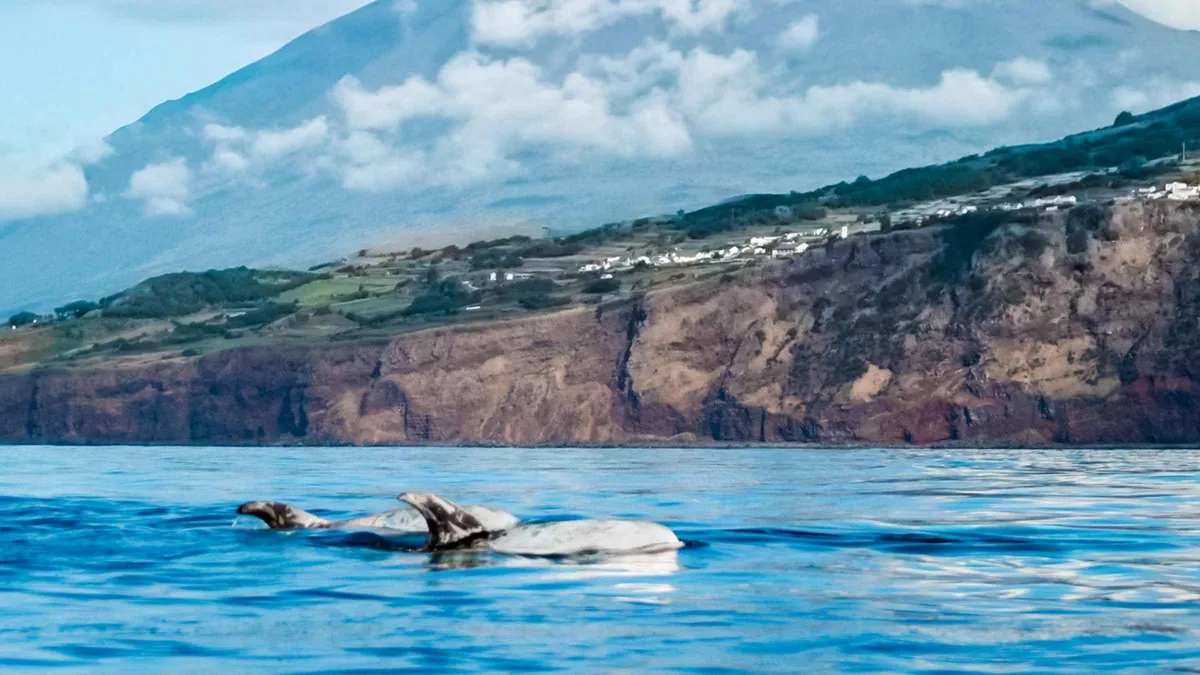
Pico Island: Whale Watching Experience from Lajes do Pico
A guided zodiac whale watching trip from Lajes do Pico with certified nature guides and marine biologists on board. Children under eight, pregnant travelers and people with back or heart problems are not admitted, and departures depend on weather and sea conditions. Good for travelers staying on Pico who want whale watching with expert eyes on board.
Check Availability from $91.83
Small group
from $91.83
Small group São Miguel Island: Full Day All-in-One Tour
A one-day greatest-hits lap of Sao Miguel capped at 15: Vista do Rei, the Santa Iria viewpoint, a tea plantation, Furnas stew and more, with hotel pickup. Entrance fees at Furnas Lake and the stew meal are included. Good for short-stay travelers who want the island's highlights distilled into a single efficient day.
Check Availability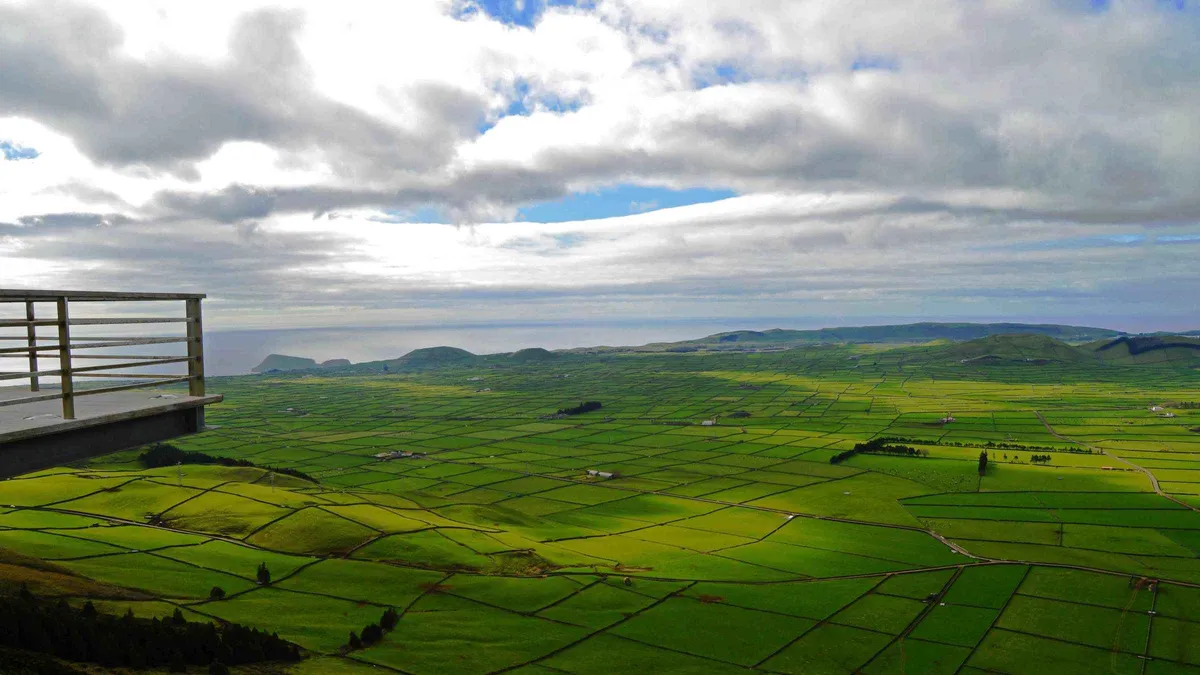 from $99.87
Small group
from $99.87
Small group Azores: Terceira Island Full-Day Tour
A full-day guided circuit of Terceira taking in Monte Brasil, the Serra do Cume, the Algar do Carvao lava tube, natural swimming pools and a taste of local gastronomy. The listing runs as a small group with pickup available. Good for first-time visitors who want the island's headline sights in one day.
Check Availability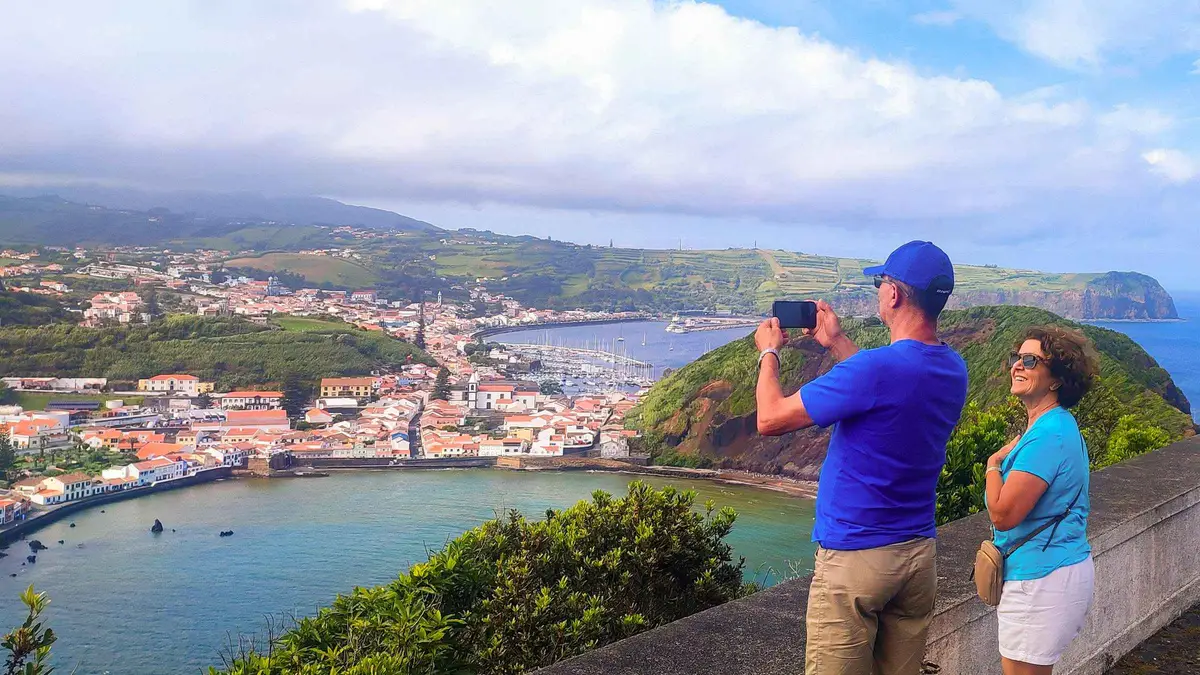 from $113.64
Full-Day Faial: Capelinhos, Caldeira & Local Guide
A full-day lap of Faial with local guide Ramiro, taking in the Caldeira, the Capelinhos volcano and quiet viewpoints at a relaxed pace, with hotel pickup, mineral water and a lunch option. The operator advises a waterproof jacket because the weather can change fast. Good for travelers who want one island explained by someone who lives on it.
Check AvailabilityPrices, ratings and details are the platform's own. dollar figures are the listed prices — the platform bills in your account's currency.
Which Azores Island Should You Pick
Pick by headline act: lakes and ease point to São Miguel, the climb to Pico, history to Terceira, the far west to Flores and Corvo.
Your first Azores trip: São Miguel
The base island carries the direct international flights, so a first trip needs no internal flights at all. It also holds the two signature lake districts, Sete Cidades in the west and the caldeiras and hot springs of Furnas in the east. Add the tea and pineapple plantations and the Ponta Delgada base, and the island fills a week on its own.
For the full sight list with prices, see things to do in the Azores. This is the default pick for anyone landing at PDL who wants the biggest range in the shortest moves.
The climb: Pico
Mount Pico is Portugal's highest point at 2350 m, and it is the only island whose headline act needs a reservation made in a booking app. The ascent starts at pico mountain from about 1,250 m, and the reservation must be made in advance through the pico mountain booking portal, where the price shows only inside the app. Pair the climb with the island's UNESCO vineyard landscape and a whale watching trip from Lajes do Pico.
Book the climb before you book anything else on this island, because the slots are the constraint.
Sailors, gin and wine: Faial and Pico's vineyards
Horta's marina culture and the 2004 UNESCO vineyard landscape sit one short ferry hop apart, so these two islands work as one stop. On faial, Peter Café Sport has been a meeting place for sailors for over a century, and the Capelinhos volcano marks the archipelago's last eruption, in 1957 and 1958. Across the channel, Pico's currais, the basalt-walled vineyard squares, hold the UNESCO listing.
Atlânticoline runs the crossing, and no static fare is published, so check the live timetable when you book.
Caves and history: Terceira
Terceira pairs a UNESCO town with a volcanic chimney you descend on 338 steps. The central zone of angra do heroismo was inscribed by UNESCO in 1983, and the algar do carvao cave drops 90 m to a lake under milky-white silica stalactites. Add Serra do Cume's walled fields and Monte Brasil, an old sea volcano guarding Angra's bay.
The full-day guided tour covering the island's highlights costs $99.87 and runs 8 hours. Ferries call at Angra and Praia da Vitória, and flights land at TER.
The far west: Flores and Corvo
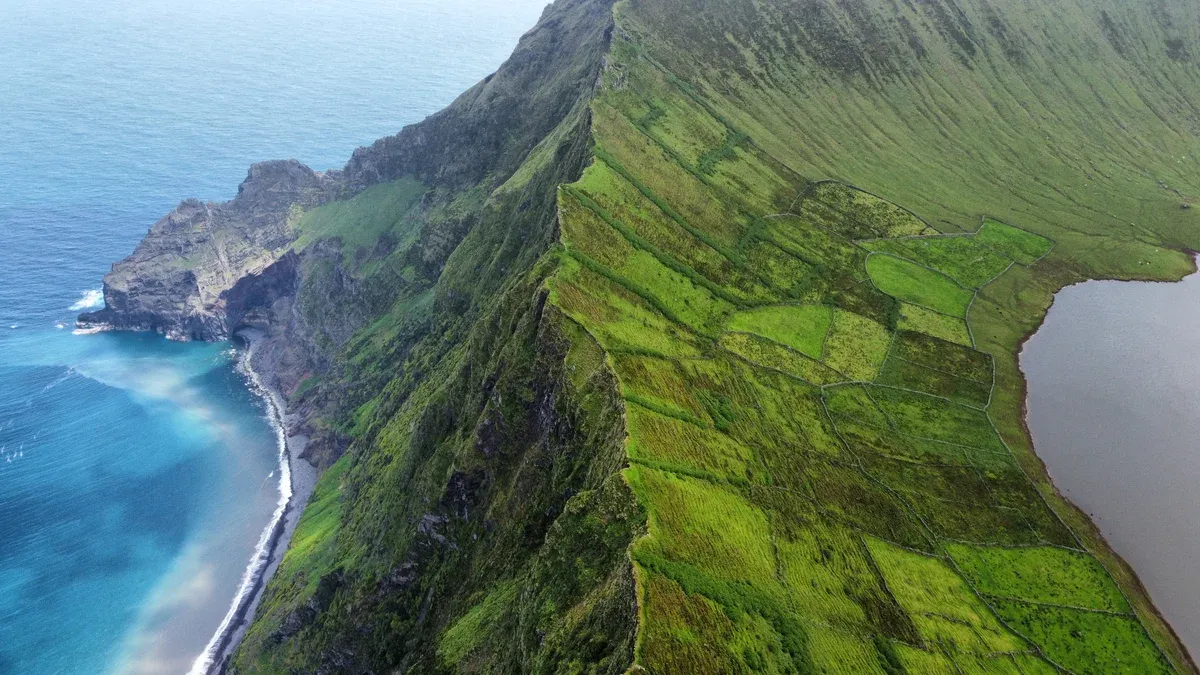
Flores and Corvo are the far edge. Flores carries almost twenty waterfalls on the Fajãzinha coast, seven crater lakes, and the Monchique Islet, the westernmost piece of land of the European Continent. Corvo adds the Caldeirão crater lake inside a 2.3 km-wide collapse, on the smallest island at 17.1 km².
Reach them by flights to FLW and CVU from Boston, Toronto, Montreal and Halifax, with a long seasonal ferry line. Start planning at flores island azores and corvo.
Getting Between The Islands
Visit Azores splits inter-island travel two ways: boats via AtlânticoLine and regional flights via Azores Airlines. Neither operator publishes static fares.
Published facts, move by move
The table lists what each operator actually publishes. Where a cell is empty of figures, that is the operator's choice, not an oversight.
| Move | How | What is published |
|---|---|---|
| Horta to Madalena (Faial to Pico) | Atlânticoline ferry | No static crossing time or fare. The timetable is a date-by-date search tool |
| São Miguel to any other island | Azores Airlines flight from Ponta Delgada | Fares per route are not published as pages, the airline site shows live fares only |
| Boston to Pico, Horta, Terceira, Santa Maria or Flores | Azores Airlines direct | The airline lists these North America routes to the islands' own airports |
| Toronto or Montreal to Terceira, Pico, Horta, Flores or Corvo | Azores Airlines direct | Halifax also reaches Flores and Corvo |
| São Jorge and Graciosa from North America | No direct service | Served from Lisbon and Porto only |
The Azores Stopover trick
The Azores Stopover lets you add a stop of 1 to 7 days in the islands at no extra airfare on North America to Europe and North America to Cape Verde itineraries. It turns a connection at Ponta Delgada into an island stay, so a Boston to Lisbon ticket can include São Miguel, or another island with a direct route, without a second fare. Book it with the airline when you buy the ticket, not after.
The full route list and booking detail sit in our flights to azores guide.
UNESCO And Biosphere Honours
Two World Heritage sites and a shelf of biosphere reserves, island by island.
World Heritage and biosphere reserves
The region holds 2 UNESCO World Heritage sites out of Portugal's 17 World Heritage sites in total. The first is the Central Zone of the Town of Angra do Heroismo on Terceira, inscribed in 1983, a 212.40 ha central zone on a mid-Atlantic island. The second is the Landscape of the Pico Island Vineyard Culture, inscribed in 2004, an outstanding example of farming adapted to a remote volcanic environment, where vines grow in basalt-walled squares called currais.
Both honours are readable on foot: the old town of angra do heroismo and the vineyard coast of pico island. Beyond World Heritage, Visit Azores confirms UNESCO Biosphere Reserves on Corvo since 2007, Graciosa since 2007 and Flores since 2009. The regional government counts four island biosphere reserves including the Fajãs de São Jorge.
Graciosa's Furna do Enxofre sits inside a biosphere nucleus, and Corvo's Caldeirão anchors the smallest of the reserves.
Island Records: Highest, Oldest, Smallest, Westernmost
Four islands hold four records. Each is an official figure, not a tourism slogan.
Highest: Mount Pico, 2350 m
Visit Azores prints 2350 m as the top of Portugal, and notes the climb begins at approximately 1,250 m, which is about 1,100 vertical metres of ascent by arithmetic. Other sources use 2,351 m. The crater holds a lava cone known as Piquinho, with fumaroles.
Climbs are reserved through the official portal, and night ascents start between 16:00 and 24:00 with a mandatory presentation at Casa da Montanha in Madalena. The practical detail lives in our pico mountain guide.
Oldest: Santa Maria, about 10 million years
Santa Maria was the first island to be formed, emerging about 10 million years ago from the surrounding seafloor. Because it is the oldest island of the Azores, its volcanic and sedimentary rocks record the various oscillations of sea level, and fossils including shark teeth, sea urchins and cetacean bones are displayed at the Dalberto Pombo Environmental Interpretation Centre in Vila do Porto. The island also holds the archipelago's clearest beach, white Praia Formosa.
Details at santa maria azores.
Smallest: Corvo, 17.1 km²
Corvo is the smallest island of the Azores at 17.1 km², with 430 residents counted at the 2011 census. Vila do Corvo is the only town on the island. Its headline sight is the Caldeirão, a collapse crater up to 2.3 km across and 305 m deep, holding a shallow lake and several small volcanic cones that many say outline the drawing of the Azores Islands.
Boat trips from the island go out to see seabirds, dolphins and whales. Reach it by air from Toronto, Montreal and Halifax, or by the ferry port at Vila do Corvo.
Westernmost: the Monchique Islet
The Ilhéu de Monchique, off Flores, is the westernmost piece of land of the European Continent, per Visit Azores. Flores itself stacks the records: almost twenty waterfalls fall on the Fajãzinha to Fajã Grande coast, with Ribeira Grande standing out at 300 metres high, and the island holds seven named crater lakes, with Lagoa Negra the deepest at 105 metres. Rocha dos Bordões adds vertical basalt columns resembling a pipe organ.
Full planning sits in our flores island azores guide.
What The Islands Cost: The Price Comparison
Conversions use €1 = $1.146. Most island infrastructure prices are simply not published, so the table splits what exists from what does not.
Prices and gaps
The published prices come from the booking platform this site checks. The empty price cells are negative findings, confirmed against the operators' own pages.
| Item | Price | Status |
|---|---|---|
| Ponta Delgada hotel tax | $2.29 (€2.00) a night, capped at 3 nights | In force since 2025, guests aged 13 and up |
| Whale watching from Lajes do Pico | From $80.35 | Platform price, 3 hours, 4.9 rating from 976 reviews |
| Full-day Terceira island tour | $99.87 | Platform price, 8 hours, 4.7 rating from 333 reviews |
| Full-day Faial tour with a local guide | $113.64 | Platform price, 7 hours, rated 5 from 69 reviews |
| Pico mountain climb reservation | Not published. The figure shows only inside the official booking app | |
| Atlânticoline ferry fares | Not published. No route shows a static fare page | |
| Capelinhos centre entry, Faial | Not verified. The official page blocks automated reading and third-party figures conflict |
More figures that do not exist
The Museu do Vinho do Pico prints no hours or price on any official page. Casa da Montanha, the Pico climb base, publishes no opening hours. The same pattern holds across the archipelago: the Pico reservation price appears only inside the booking app, Atlânticoline shows fares only in its live search, and the Capelinhos centre price cannot be verified because the official page blocks reading and third-party figures conflict. in Q3 2026
The Nine Islands On One Map
Where To Plan Next
Four next steps, from sights to season.
Things to do
The sights of the base island, ranked and priced: things to do in the Azores.
São MiguelAzores Islands Questions
What is so special about the Azores?
Nine volcanic islands in the mid-Atlantic, two UNESCO World Heritage sites, and waters Visit Azores calls one of the world's largest whale sanctuaries, with more than 20 cetacean species and sightings reported on 98% of trips. Whale watching runs year-round, and boats leave from several islands including Lajes do Pico. The transport is also unusual: a ferry network serving seven islands where no route publishes a static fare or timetable page, so planning a hop means a live search. Start at whale watching azores for the water side of the trip.
Are the Azores expensive to visit?
The honest answer: no island charges entry. Ponta Delgada's hotel tax is $2.29 (€2.00) a night, capped at 3 nights. On the platform this site checks, full-day island tours run from about $80 to $115, for example whale watching from Lajes do Pico at $80.35 and a full-day Faial tour at $113.64. The biggest-ticket item, the Pico climb, publishes no price at all outside its booking app, and Atlânticoline publishes no ferry fares. Most infrastructure figures are simply not published. See azores cost.
How do I get to the Azores from the US?
Azores Airlines sells direct flights from Boston and New York to Ponta Delgada. Boston also reaches Terceira, Santa Maria, Pico, Horta and Flores. From Canada, Toronto, Montreal and Halifax cover the northern islands including Corvo. São Jorge and Graciosa are served from Lisbon and Porto only. The useful trick is the Azores Stopover, which adds a stop of 1 to 7 days in the islands at no extra airfare on North America to Europe itineraries. Route detail and booking notes sit in flights to azores.
What are the best months to visit the Azores?
No official page names a best month, so use the climate facts instead. Ponta Delgada's averages run from about 17.4 °C mean daily high in February to 26.0 °C in August, with July the driest month at about 26 mm of rain and December the wettest at 152.8 mm. Rain days average about 122 per year, and frost days zero. Sightings of whales are reported on 98% of trips year-round. Our estimate is that late June through early September gives the driest mix of walking weather and long days. Month detail at azores weather.
Can you island hop without a car?
Yes, by ferry inside the Atlânticoline port group and by flight everywhere else. The ferry network serves Horta, Madalena, Cais do Pico, Velas, Calheta, Angra do Heroísmo, Praia da Vitória, Vila da Praia, Santa Cruz and Vila do Corvo. But no route publishes a static fare, and the timetable is a date-by-date search tool, so budgeting means running the booking engines rather than reading a price list. Santa Maria has no ferry port at all and is air only. The full strategy is in azores without a car.
Which Azores island should I visit first?
São Miguel. It carries the direct international flights to Ponta Delgada, so a first trip needs no internal flights at all. It also holds the two signature lake districts, Sete Cidades and Lagoa do Fogo, the Furnas hot springs, and the tea and pineapple plantations, which is the widest range of sights in the smallest area. Once you know the islands, add Terceira for history or Pico for the climb. The ranked sight list for the base island is in things to do in the Azores.
The Azores Islands On Film
TOP 10 THINGS TO DO in the AZORES ISLANDS, PORTUGAL ! (Watch Before You Go)
A fast tour of the archipelago's headline sights, islands included.
Video: Jon BarrAzores Travel Guide: See the 9 Islands Before They Change in 2026
All nine islands in one sweep, useful for the which-island decision.
Video: VistaWondersAÇORES COMPLETE TRAVEL GUIDE 2026 | All 9 Islands Explained | Hidden Paradise of Europe
An island-by-island explainer to pair with the table above.
Video: Travel with Sofia RogersVideos load from YouTube only when you press play.
We may earn a commission if you book through one of our links, at no extra cost to you. Full affiliate disclosure