 Guide to the Azores
Is the Pico Climb Worth It? Portugal's Highest Mountain, Judged Honestly
Is the Pico climb worth it has an answer shaped by one strange fact: the government portal that controls the mountain does not print its own price. Booking runs through montanhapico.azores.gov.pt, the mountain is Portugal's highest point, and the weather, not your fitness, decides most climbs. Our Pico mountain guide covers the climb itself and the Pico booking page covers the portal. This page does what neither can: it weighs the climb honestly, for and against, by traveller type. The rest of the island sits on Guide to the Azores.
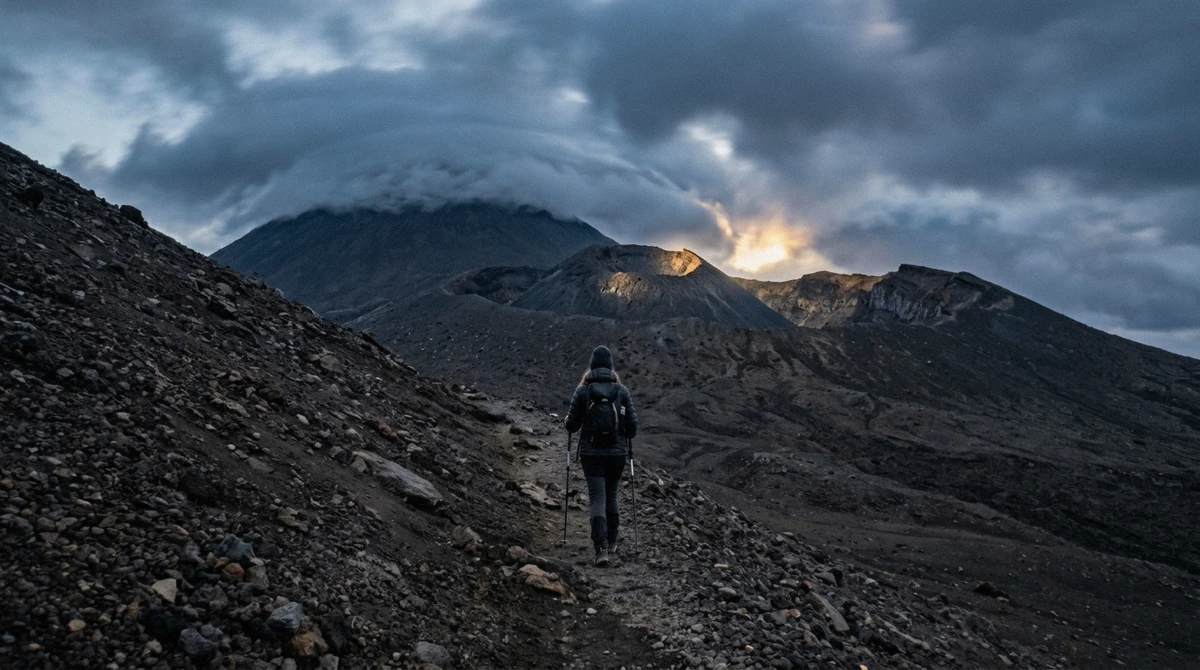
Quick answer The short verdict on climbing Mount Pico
For a fit hiker with a clear weather window and a night booked through the official portal, yes, the Pico climb is worth it: 2,350 metres of summit, the highest point of Portugal, and a crater with a fuming cone called Piquinho. The catch is everything around the summit. The price is not published anywhere on montanhapico.azores.gov.pt, you meet it only inside the booking app, the weather-call policy is unpublished, and a guided ascent is one of two booking categories rather than a requirement. Casual walkers should read our Pico mountain guide and think twice.
Key takeaways
- The official portal offers an autonomous ascent without guide as a booking category, so the claim that a guide is mandatory is not what the portal publishes, as our booking categories section explains.
- The climb price sits inside the JS booking app and is not published statically, a finding tracked on our price status page.
- Night climbs start between 16:00 and 24:00 with a mandatory presentation at Casa da Montanha in Madalena, detailed in our night windows section.
- The climb starts at roughly 1,250 metres and finishes at 2,350 metres, a vertical exercise on bare volcano that our Azores hikes guide ranks apart from the island trails.
The Two Ways Up
The booking portal splits every climber into one of two categories, and the table reads the official text against what each category actually asks of you.
| Autonomous ascent | Guided ascent | |
|---|---|---|
| Booking category on the portal | Exists, listed as an autonomous ascent without guide | Exists, with an accredited guide recommended in the portal's own text |
| Price | Not published, shown inside the booking flow | Not published, shown inside the booking flow |
| What the rules say | Set by the reserve access regulation, minors accompanied | Set by the same regulation, guide handles the mountain judgement |
| Who it suits | Experienced, self-sufficient hikers with navigation and mountain kit | Anyone who wants weather, route and pace decisions taken by someone paid to |
| The honest catch | No published duration, no published gear check at booking | Costlier, and the portal does not publish the guide price either |
Read from the official portal's own text and the reserve access regulation references in Q3 2026.
The Price Nobody Prints
Start with the strangest fact about this climb. The official booking portal, montanhapico.azores.gov.pt, invites you to schedule your ascent and assure your reservation and access, and nowhere on its public text does it state what that costs. The price appears only inside the reservation flow, a JavaScript booking app, so no figure can be quoted or compared from the open web.
Third-party numbers circulate anyway. A figure around €15 appears on blogs and forums, and this site's position is simple: it is not official, the portal does not print it, and we will not repeat it as fact. What you can do is enter the booking flow and see the real number for your date and category before committing.
A related trap sits in the search results. The domain picomountain.com, which looks authoritative, belongs to a ski resort in Vermont, complete with an Ikon Pass and a December opening day. It has nothing to do with the Azores mountain. The real portal is the azores.gov.pt address, run by SRAAC, the regional environment and climate secretariat, with a published contact phone and email.
How this affects the worth-it question is direct: a climb whose own gatekeeper hides its price asks you to commit slightly blind, and that friction is a real cost for planners. The price situation is tracked in our price status section.
Guided or Autonomous: Two Categories, Not a Ban
The most repeated claim about Pico, that a guide is mandatory, does not match what the portal publishes. The booking form offers an autonomous ascent without guide as a category, alongside guided bookings where an accredited guide is recommended. Access rules are set by the Regulamento de Acesso à Reserva Natural da Montanha do Pico, established by Portaria number 25/2020 as amended in July 2023, and the portal's own text shows no outright guide requirement.
What the regulation does reference is protection for the young: minors must be accompanied, and a minimum age of 5 is referenced in the material around the rules. The full legal text deserves a read before you test either edge, and our booking rules section keeps the current picture.
The practical choice is not legal but judgemental. The autonomous category hands you navigation, weather reading and turnaround decisions, on a upper mountain of bare rock and scree where cloud can close in fast. The guided category buys someone whose job is those decisions. Nothing on the portal publishes a gear check for either category, which means nobody official verifies your boots, your layers or your headlamp before you start.
And one more silence worth knowing: Casa da Montanha, the presentation point in Madalena, publishes no opening hours on the fetchable pages, so even the logistics begin with a phone call.
The Night Climb and the Mountain Itself
Most Pico ascents are night ascents, booked to start between 16:00 and 24:00 with a mandatory presentation at Casa da Montanha in Madalena before you drive to the trailhead. The point is sunrise from the top of Portugal, and the mountain's geometry makes it work: the climb begins at roughly 1,250 metres, and the summit stands at 2,350 metres, the highest point of the country.
What you climb into matters as much as the height. The upper mountain is bare volcano, the crater holds a small lava cone known as Piquinho with fumaroles still breathing, and the ground is scree and rock the whole way. No official page publishes a climb duration, which should tell you something: the mountain is climbed at wildly different speeds, and the honest planning unit is the weather window, not the clock.
How hard is it, honestly? The altitude is modest by Alpine standards, the trailhead is driveable, and the route needs no technical gear. What it demands is steady legs on loose ground for the vertical, cold-weather layers above the cloud, and the willingness to turn around. Our Pico mountain guide carries the mountain's own pages' details, and the hikes guide puts it against the island trails for scale.
The Weather Call
Here is the fact that decides more climbs than price or fitness. The portal publishes no weather-call policy: nothing on its fetchable text states when the mountain closes for wind, or what happens to a booking when it does. The mountain's closure behaviour is an unpublished gap, and climbers plan around it themselves.
The mountain's own geography explains why the call matters. At 2,350 metres on a mid-Atlantic island, the summit makes its own weather, and a blue morning at the trailhead guarantees nothing at the top. The climb is regularly written off at the crater rim in cloud, which is why experienced climbers build a spare day into a Pico trip and treat the first clear window as the attempt.
The practical protocol, then: book the window, watch the forecast for Pico island specifically rather than the Azores generally, confirm the presentation logistics at Casa da Montanha by phone since the hours are unpublished, and decide at the mountain, not from a hotel room. If the window fails, the island still pays you back: the vineyard landscape below is UNESCO-listed, the whale boats run from Lajes do Pico, and the Pico island guide lists what a grounded climber does instead.
Who the Climb Is Worth It For
The climb earns its slot for a specific traveller. Regular hikers with real mountain kit, a spare day for weather and a night ascent booked in advance get Portugal's highest summit with a fuming crater at the top, an experience nothing else in the country quite copies. For that traveller, the unpublished price is an irritant, not a dealbreaker, and the autonomous category keeps the mountain wild in a way guided-only peaks are not.
It is worth qualifying for a second group: fit couples and families with teenagers, provided the night start and the cold are taken seriously and the minimum-age reference of 5 is respected with an adult beside every minor. The presentation system at Casa da Montanha exists precisely so that the mountain knows who is up there in the dark.
It is not worth it, or not yet, for casual walkers. If the strongest walk in your year is a coastal footpath, a 1,100-metre vertical on scree in the dark is misery with a view, and Pico island's vineyards, pools and whale boats deliver better days. And it is not worth it for travellers who cannot tolerate a weather write-off, because the mountain closes itself on its own schedule, whatever the booking app promised. When the answer is no, the Pico island guide holds the better itinerary.
So, Is the Pico Climb Worth It?
If you are a regular hiker with a spare day and real layers
Book it through the official portal, aim for the night window, and treat the unpublished price as the toll for Portugal's roof.
If your group is casual walkers or young children
Skip the summit and take the island: the vineyard landscape, whale watching and natural pools in our Pico island guide beat a dark scree march for that group.
If the forecast shows wind or cloud for your only day
Do not force it. The mountain publishes no closure policy, the crater rim is where clouds eat climbers, and a moved booking beats a white-out.
If you want the summit but not the navigation burden
Book the guided category. A guide is recommended rather than mandatory in the portal's own text, but on the upper mountain the paid judgement is worth the margin.
Is the Pico Climb Worth It: Questions
How much does the Pico climb cost?
The honest answer is that nobody outside the booking flow can tell you. The official portal montanhapico.azores.gov.pt shows prices only inside its reservation app, with no static figure on any public page. A figure around €15 circulates on third-party sites, but it is not official and should not be planned around. Enter the booking flow for your date and category to see the real number, and track the situation on our price status page.
Is a guide mandatory on Mount Pico?
The portal's own booking form offers an autonomous ascent without guide as a category, alongside guided bookings where an accredited guide is recommended. So no, a guide is not mandatory as far as the official portal publishes, though access rules are set by the reserve access regulation of 2020 as amended in 2023, and the full legal text is worth reading if you plan to test the edges. The two categories are compared in our booking categories section.
Why does picomountain.com look wrong?
Because it is the wrong mountain. picomountain.com is a ski resort in Vermont, United States, with its own Ikon Pass page and a December opening day, and it has no connection to the Azores. The real booking portal for the Azores mountain is montanhapico.azores.gov.pt, run by the regional environment secretariat SRAAC, with published contact details of (+351) 967 303 519 and an azores.gov.pt email address.
How long does the climb take?
No official source publishes a duration, which is itself the finding. The climb starts at about 1,250 metres and finishes at 2,350 metres, and night ascents are booked to start between 16:00 and 24:00 with presentation at Casa da Montanha in Madalena, so the scheduling unit is the weather window rather than the clock. Anyone quoting you a fixed summit time is quoting experience, not the mountain's published figures. The climb's profile sits in our Pico mountain guide.
What happens if the weather closes the mountain?
The unpublished fact first: the portal states no weather-call policy on its public pages, so there is no official rule to quote about closures or compensation for wind and storms. Practical planning treats the first clear window as the attempt, books with a spare day, and confirms arrangements by phone, since even Casa da Montanha's opening hours are not published. On a grounded day, the island's vineyards and whale boats are the consolation, as our Pico island guide sets out.
Can children climb Mount Pico?
The rules reference a minimum age of 5 and require minors to be accompanied, per the material around the reserve access regulation, though the full legal text should be read before testing that boundary. The honest advice is harder than the rule: a night climb of 1,100 vertical metres on scree, in cold above the cloud, is an adult-pace mountain, and most families get more from the island below. If the summit is the goal, the guided category puts a professional judgement between your family and the mountain.
The climb on video
Three films from climbers who made the same decision, which is the fastest way to judge the scree, the dark and the reward before you book.
Climbing Mount Pico (Azores): The Ultimate Step-by-Step Guide
The route from trailhead to Piquinho, step by step.
Video: PortoalitiesClimbing Pico Mountain Safely: Guide For Average Climber: AZORES ISLANDS GUIDE
The safety-first read, aimed at exactly the borderline traveller this page weighs.
Video: Christine NoblesSolo Hiking Mount Pico: Everything You Need to Know
The autonomous category, lived, including the weather judgement.
Video: Natasha BergenLinked as published on YouTube. We have no connection to these channels.