 Guide to the Azores
Azores Weather
Azores weather is mild in every month, with mean highs running from 17.4 °C in February to 26.0 °C in August at Ponta Delgada, and the numbers below prove it straight from the official IPMA climate normals. The real planning variable is rain, not cold, which is why the month choice matters more than the season. Start with the table, then read what the figures do and do not tell you before you build the rest of your trip on the Guide to the Azores.
Quick answer Mild all year, rain from October, one station, sea 17 to 25 °C.
Azores weather is mild every month, with mean highs of 17.4 °C in February rising to 26.0 °C in August and an annual mean of 18.2 °C at Ponta Delgada. Rain rather than cold is what changes a plan: December averages 152.8 mm against July's 26.0 mm.
Key takeaways
- Every month at a glance, then weighed against each other on the best time page.
- The sea runs roughly 17 to 25 °C over the year, which matters as much for whale watching as for swimming.
- Weather does close things, from hot springs to high trails, so check the hike pages before a walking day.
Azores Weather by Month: The Full Normals Table
These are the IPMA climate normals 1991 to 2020 for station 513 at Ponta Delgada: air temperature in Celsius, rain in millimetres. Rain days are averages of days with 1 mm or more, published only for the year, December and July.
| Month | High | Low | Rain | Rain days |
|---|---|---|---|---|
| January | 17.5 °C | 12.7 °C | 102.1 mm | |
| February | 17.4 °C | 12.1 °C | 87.2 mm | |
| March | 17.9 °C | 12.6 °C | 97.1 mm | |
| April | 18.8 °C | 13.3 °C | 79.6 mm | |
| May | 20.2 °C | 14.6 °C | 61.0 mm | |
| June | 22.4 °C | 16.8 °C | 44.4 mm | |
| July | 24.7 °C | 18.9 °C | 26.0 mm | 4.8 |
| August | 26.0 °C | 19.9 °C | 45.8 mm | |
| September | 25.0 °C | 19.1 °C | 78.2 mm | |
| October | 22.6 °C | 17.1 °C | 118.0 mm | |
| November | 19.9 °C | 14.9 °C | 95.3 mm | |
| December | 18.3 °C | 13.4 °C | 152.8 mm | 15.0 |
IPMA labels this series "híbrida", observed stations plus WRF-modelled data, so values can shift with quality-control updates. The month-by-month decision built on these figures lives on best-time-to-visit.
What These Numbers Actually Are
One weather station
Every figure on this page comes from a single place: the Observatório Afonso Chaves in Ponta Delgada, station 513, sitting 35 m above the sea on the coast of São Miguel. It is not an average of nine islands, and it should never be read as one. The other islands differ, and Santa Maria is the named exception in the official material, with a dry warm climate that earned it the nickname Island of the Sun.
A hybrid series, in IPMA's own word
IPMA labels the series híbrida, meaning it combines observed stations with WRF-modelled data, and values can shift when quality control runs again. The page therefore never rounds the normals into slogans. The decimals stay because they are the source's numbers, not ours.
Does It Get Cold in the Azores?
Frost and heat are both rare
No. The normals record zero frost days and zero days at or above 30 °C in an average year. No month has a mean low below 12.1 °C, which is February. The record low is 5.0 °C, set on 19 January 1991, and the record high is only 30.1 °C, from 23 August 2011.
Days of 25 °C or more average 60.8 a year, so genuine warmth exists but stays modest.
What winter actually feels like
Winter feels cool and damp rather than cold, with mean lows of 12 to 13 °C and highs near 18 °C. The practical answer is layers and a shell rather than a heavy coat, which is the whole logic of our packing list.
How Much It Rains, and When
The numbers
Ponta Delgada averages 987.5 mm of rain a year across 122.3 rain days of 1 mm or more. December is the wettest month at 152.8 mm with 15.0 rain days, and October is the autumn spike at 118.0 mm. July is the driest at just 26.0 mm with 4.8 rain days.
The practical read
Rain in the Azores usually arrives in shows between bright periods rather than settling in for the day, which is why a single wet morning rarely ruins an itinerary. Treat the figures as means, not promises. They tell you the odds of a wet hour, not the fate of your specific afternoon.
Sea Temperature: What 17 to 25 °C Feels Like
The annual range
Off São Miguel the sea runs roughly 17 to 25 °C over the year, and we quote it as a range because the figures are means of daily maxima from 2020 to 2024, not a swim guarantee. The coolest month is March at about 16.6 °C and the warmest is August at about 24.9 °C. January sits about 17.6 °C and December about 18.6 °C.
Swimming, whales and the fallback
Whale trips run year-round on these same waters, and the sea temperature shapes what you wear on deck more than whether you go, per Visit Azores. For swimming on the cooler days, the thermal pools are the year-round fallback: the iron-rich tank at Parque Terra Nostra holds 38 to 42 °C in every month, Poça da Dona Beija's four pools sit around 39 °C, and the natural ocean pool at Ponta da Ferraria mixes with seawater above 30 °C at low tide. Those venues carry their own pages, so the prices live there rather than here.
Why One Forecast Rarely Matches the Island You Are On
Microclimates are real
Microclimates are real on these islands. Caldeiras hold cloud, coasts differ, and a forecast drawn for Ponta Delgada can be wrong an hour's drive away. Remember that every normal on this page comes from one coastal station, so treat it as a baseline for São Miguel's south coast rather than a promise for the whole map.
The one official island-level contrast is Santa Maria, whose dry warm climate and the Red Desert at Barreiro da Faneca earn it the Island of the Sun nickname.
Elevation changes everything
Conditions shift fast with height, from sea level up to the 2,351 m summit of Mount Pico, where the climb starts around 1,250 m. The mountain's weather-call policy is not published anywhere official, so climbers watch the official booking channels themselves before setting out. Build flexibility into any walking day with the hikes guide.
What the Weather Closes
Know before you drive
Caldeira Velha's manager may close the facility for weather conditions, and the official trail site carries alerts for closed routes. Weather also changes how you reach places: in the summer season the Fogo shuttle (1 August to 30 September 2026, 09:00 to 20:00 daily) replaces private cars on the Lagoa do Fogo road, and the transport detail lives on getting around. Check Caldeira Velha for hours before a hot-spring day.
Slots beat the weather
Where weather and crowds meet, capacity rules decide who gets in. Caldeira Velha sells timed e-tickets in 1h30 blocks and caps the thermal pools at 100 bathers, 250 visitors on site, so a booked slot protects the day in a way a sunny forecast cannot. Its manager may close the facility for weather conditions, and when that happens the booking, not the rain, is what you wish you had moved earlier.
The Year in Four Seasons, In Words
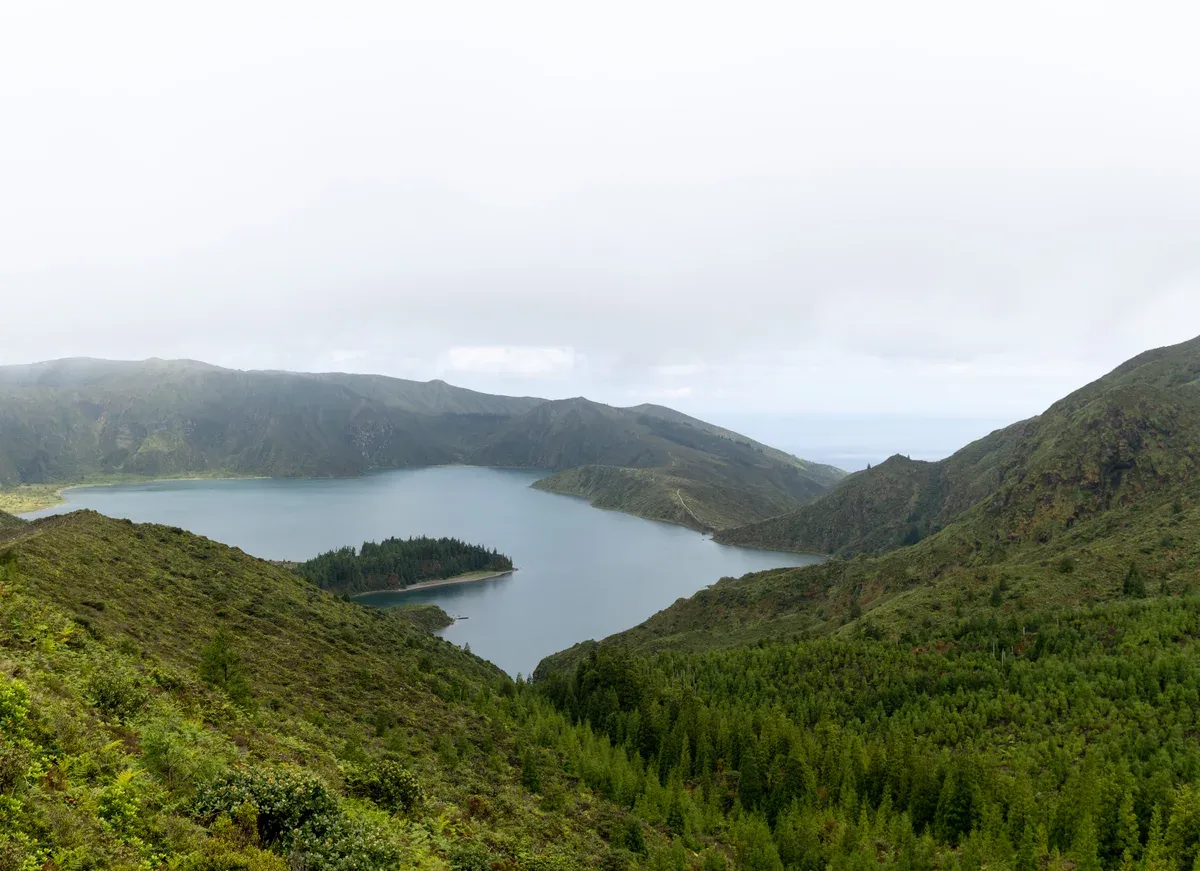
Photo: Jules Verne Times Two, CC BY-SA 4.0, via Wikimedia Commons. The Miradouro da Lagoa do Fogo, reached by the seasonal shuttle or, outside its season, by car.
Winter, December to February
The wet season, and the greenest the islands ever look. Mean highs hold between 17.4 and 18.3 °C, lows sit between 12.1 and 13.4 °C, and the rain peaks at 152.8 mm in December against 87.2 mm in February. Snow is not a thing at the coast: the coldest the station has ever recorded is 5.0 °C. Plan around shower windows rather than washout days.
Spring, March to May
The sea reaches its coolest here, about 16.6 °C in March, while the air climbs from a 17.9 °C high in March to 20.2 °C in May and the rain falls away from 97.1 mm to 61.0 mm. April and May are the quiet-trail months, with hydration in the landscape and fewer people on the crater rims.
Summer, June to August
The driest stretch runs 44.4 mm in June, 26.0 mm in July, 45.8 mm in August, against highs of 22.4, 24.7 and 26.0 °C. Even now the station average records zero days at or above 30 °C, so summer here is warm rather than hot, and the sea follows a month behind the air.
Autumn, September to November
September is a fifth summer month, 25.0 °C and 78.2 mm, then the autumn spike lands: October takes 118.0 mm at a still-mild 22.6 °C high, and November opens the wet season at 95.3 mm. Whale watchers keep their focus offshore, where spotted dolphins give way to the year-round residents.
Whale Season Is a Weather Season
The cetacean calendar runs on water temperature and food, and it never closes. Figures from Visit Azores.
Whale watching is possible year-round in the Azores, with more than 20 cetacean species and sightings reported on 98% of trips, per Visit Azores. The residents are common dolphins and common bottlenose dolphins, present in every month, and the seasonal stars follow the water: blue whales are easiest at the end of winter, while spotted dolphins and sperm whales show in summer. That makes the sea-temperature column of the table above a rough whale calendar too, with the end of winter's cool water the blue whale window and the late-summer warm water the spotted-dolphin one.
| When | The water | Who is around |
|---|---|---|
| All year | about 17 to 25 °C across the year | Common dolphins and common bottlenose dolphins, the residents |
| End of winter | about 17.6 °C in January, rising from the March low | Blue whales, the seasonal highlight |
| Summer | up to about 24.9 °C in August | Spotted dolphins and sperm whales |
The trip itself is a weather decision: boats sail when the sea state allows, which is why the operator's own calendar matters more than any month rule. Compare boats and seasons on whale watching.
The Best Month Question, Answered Elsewhere
This page is the numbers
The month decision itself, August for warmth versus June for balance and the rest of the trade-offs, lives on best-time-to-visit, and the shape of the whole trip sits on plan.
Compare the Costs: What Weather Planning Costs
Wet-day money
The Fogo shuttle charges $9.17 (€8) for a non-resident adult and $4.58 (€4) at the reduced rate, paid on the bus. Guided days are the other line item, and the table collects them. Weather rarely refunds a booking, so the real money risk is a no-show on a wet day, which is another reason to keep one flexible day in the plan.
| Line item | Amount |
|---|---|
| Fogo shuttle, non-resident adult | $9.17 (€8) |
| Fogo shuttle, reduced (children 7 to 12, seniors 65+) | $4.58 (€4) |
| West island van day with lunch (#tour-5) | $97.57 |
| Lagoa do Fogo biologist-guided tour (#tour-7) | $55.10 |
The rate behind the conversions
Conversions on this page use €1 = $1.146 (ECB 2026-09-18). in Q3 2026
Days That Work in Any Month
These guided days run with transport and a plan B built in, which is exactly what a changeable forecast calls for.
 from $97.57
Small group
from $97.57
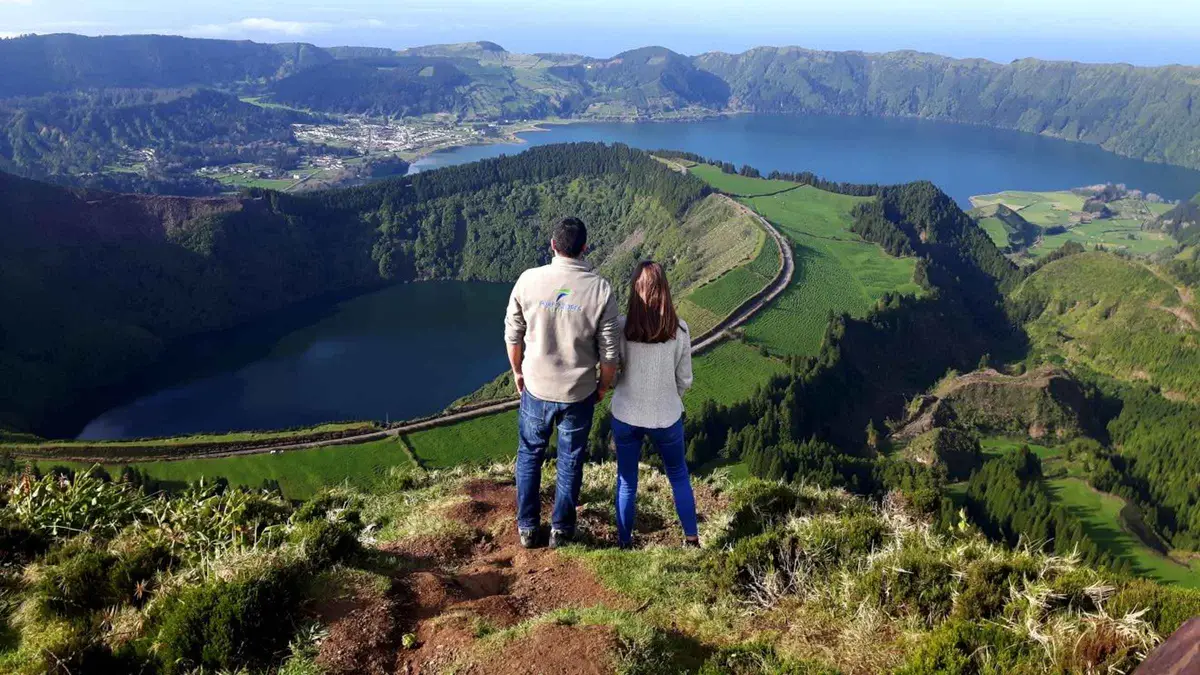
Small group São Miguel West Van Tour: Sete Cidades & Fogo Lake + Lunch
A small-group electric-van circuit of western Sao Miguel with a maximum of eight guests, taking in Sete Cidades, the Boca do Inferno viewpoint and a traditional Azorean lunch. The Boca do Inferno stop needs a moderate 20-minute walk each way. Good for travelers who want the west covered in one highly rated day without driving.
Check Availability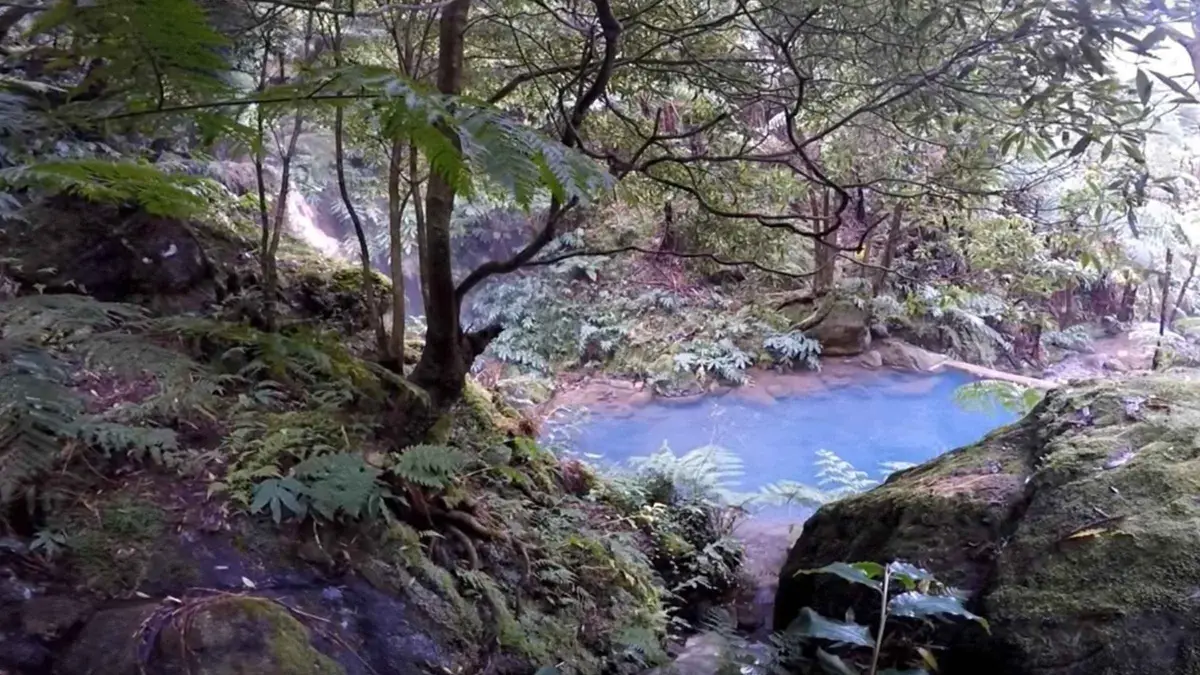 from $55.10
Small group
from $55.10
Small group Lagoa do Fogo: Biologist-guided Volcano e-Tour + Hot Springs
A biologist-guided van trip up to the Lagoa do Fogo reserve with viewpoint stops, ending in a soak at the Caldeira Velha hot springs or the Salto do Cabrito waterfall, with all entry tickets included and the skip-the-ticket-line mark. The operator warns the spring water is untreated and very hot, so bathing is not for everyone. Good for travelers who want expert commentary on volcanology along with a hot-spring soak.
Check Availability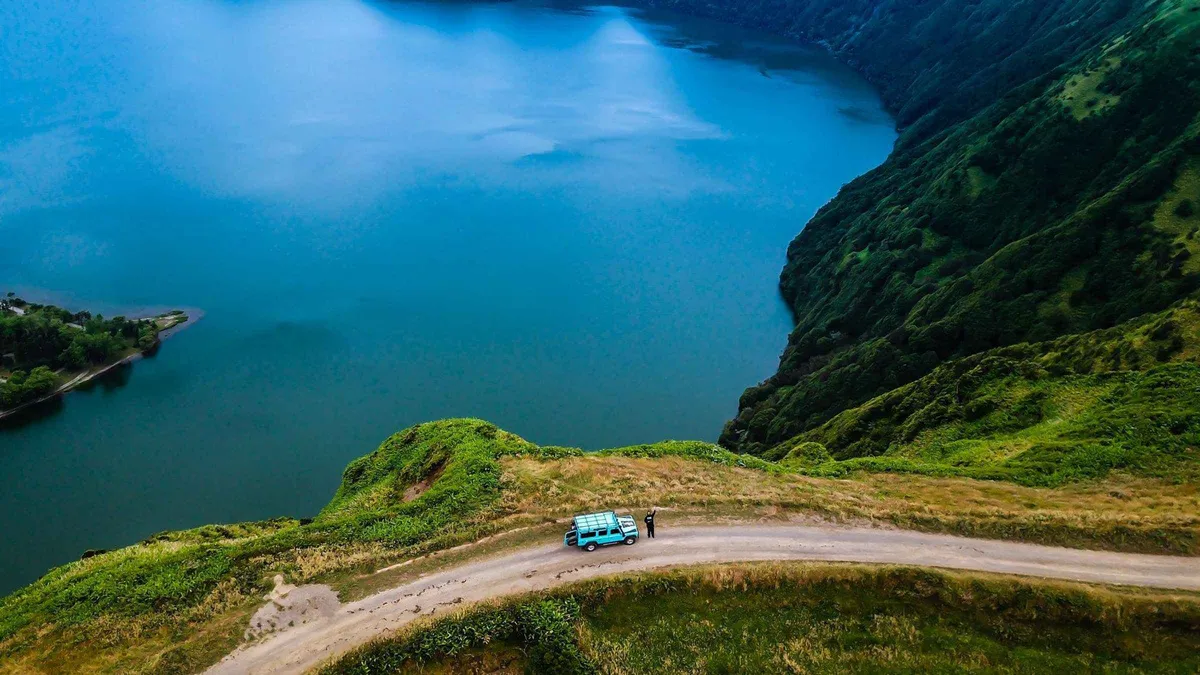 from $55.10
São Miguel, Azores: Sete Cidades Half-Day Jeep Tour
A 3.5-hour 4x4 circuit of the Sete Cidades caldera from Ponta Delgada that uses secondary roads to reach ground regular traffic misses, with a coffee stop inside the crater village and pickup at any hotel or cruise ship. Good for travelers with a free half-day who want the crater up close without committing to a full-day tour.
Check AvailabilityPrices, ratings and details are the platform's own. dollar figures are the listed prices — the platform bills in your account's currency.
Weather Decisions, One Click On
Azores Weather: Questions
What is the rainiest month in the Azores?
December, with 152.8 mm of rain and 15.0 rain days at Ponta Delgada. October is the autumn spike at 118.0 mm, so the wet stretch really starts before winter. The full month table is above.
Does it get cold in the Azores?
Not really. The record low is 5.0 °C and the normals record zero frost days a year, with winter lows about 12 to 13 °C. Winter feels cool and damp rather than cold.
What is the best month to go to the Azores?
August is the warmest month at a 26.0 °C mean high and July is the driest at 26.0 mm of rain. The full argument between them and the shoulder months lives on best time to visit.
What is the sea temperature in the Azores?
Roughly 16.6 °C in March to 24.9 °C in August off São Miguel. These are means of daily maxima from 2020 to 2024, so read them as a range of about 17 to 25 °C rather than a swim guarantee.
Is the Azores weather the same on every island?
No. Every figure on this page comes from one station in Ponta Delgada, and Santa Maria is the named exception with its dry warm Island of the Sun climate. Microclimates within islands add more variation still.
What do Azoreans eat for breakfast?
That is a food question rather than a weather one, so it belongs to the food guide. What we can say here is that a café stop is a good wet-morning plan.
Does it snow on the Pico summit?
There is no snow figure to quote: Ponta Delgada's station record low is 5.0 °C and frost days average zero there, but the summit sits at 2,351 m where no official weather-call policy is published. Climbers arrange conditions through the official booking channels on the Pico mountain page.
Is the ocean warm enough to swim in the Azores?
In August, for most people: the surface off São Miguel reaches about 24.9 °C. In March it is about 16.6 °C, which most swimmers find cold. The all-year answer is thermal water instead, from the 38 to 42 °C tank at Terra Nostra to Ferraria's low-tide ocean pool, compared on the hot springs hub.
What time zone is the Azores on?
The islands sit 1 hour behind mainland Portugal, on UTC−1 in winter, an offset carried on Wikipedia because no official page states it. For weather that means daylight runs about an hour later by the Lisbon clock, which stretches summer evenings on the water.
Does the rain ruin the hiking?
Rarely for a whole day: the rainiest month, December, still averages 15.0 rain days, so most days carry dry hours, and July manages just 4.8. The honest risk is trail alerts after wet spells, which the official trail site lists. Pick a route on the hikes guide and keep a low-level alternative in mind.
What is the warmest island in the Azores?
No station-by-station ranking is published, so a warmest-island claim would be an invention. The one official contrast is Santa Maria, whose dry warm climate and Red Desert landscape earned the island the Island of the Sun nickname, and whose beach is called the clearest in the Azores.
Azores Weather on Film
Three videos that put moving images behind the numbers above.
Azores & Bermuda High Pressure System (Anticyclone)
The background science of the high that shapes the islands' climate.
Video: Earth Science ClassroomTHE AZORES: Stunning… But So Unpredictable (My Honest Experience)
A visitor's honest account of four seasons in one day.
Video: Paddy DoyleWhen to go to the Azores
Lonely Planet's season read, the decision that follows these numbers.
Video: Lonely PlanetVideos load from YouTube only when you press play.
Prices, hours and terms are set by the venue or operator and confirmed at checkout.
We may earn a commission if you book through one of our links, at no extra cost to you. Full affiliate disclosure